

 2:56 am - October 16, 2026
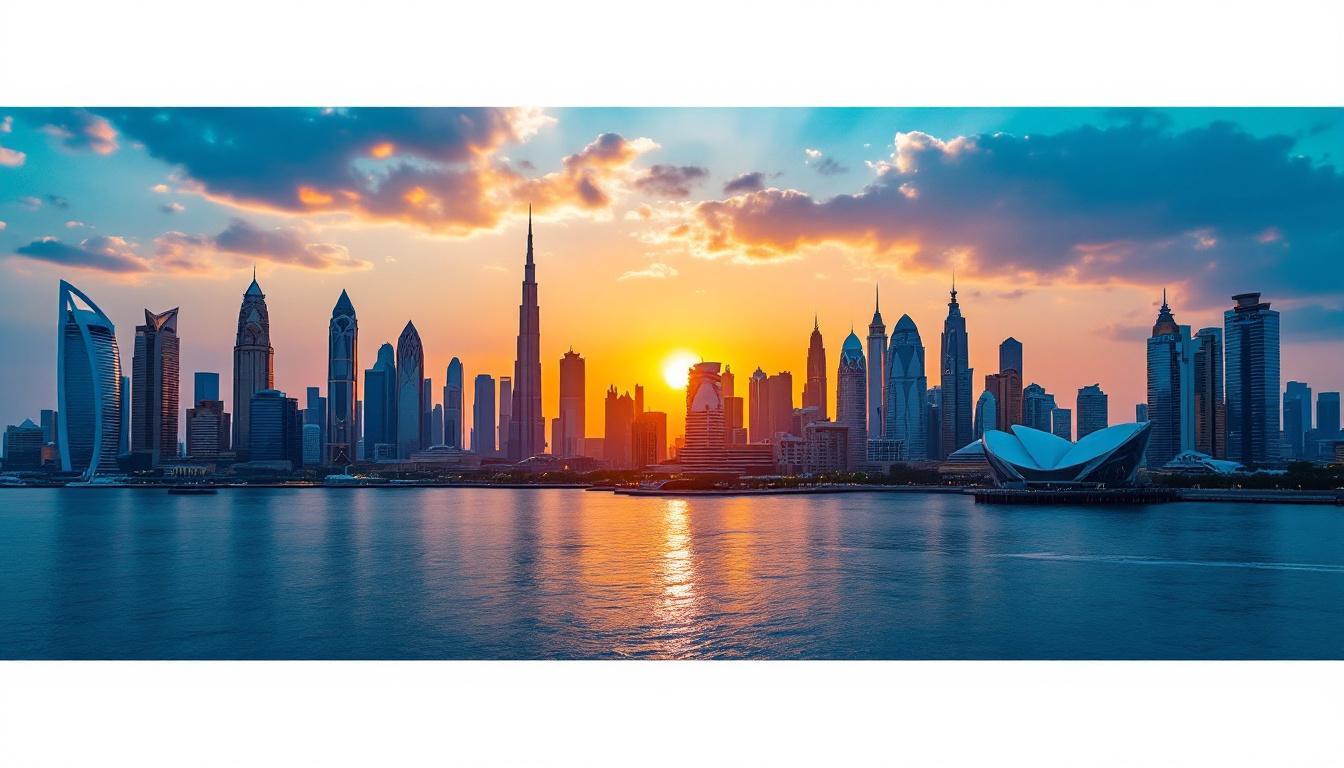
Dubai’s Supreme Council of Energy and the Mohammed bin Rashid Al Maktoum Knowledge Foundation are exploring collaborative initiatives to embed research and expertise into the emirate’s push for sustainable, efficient energy, signalling a shift towards innovation-driven growth.
Dubai’s Supreme Council of Energy, alongside the Mohammed bin Rashid Al Maktoum Knowledge Foundation, has recently started discussions aimed at deeper collaboration in knowledge sharing, specialized expertise, and research support. This move really highlights Dubai’s broader strategy to link its energy policies with innovation and human capital development.
The meeting brought together Ahmad Buti Al Muhairbi, the secretary-general of Dubai’s Supreme Council of Energy, and Jamal bin Huwaireb, who is the chief executive of the Knowledge Foundation. As reported by the council, their conversations focused on how these two entities could team up on initiatives that would boost the UAE’s knowledge-based economy and foster innovation, especially in key sectors like energy.
Interestingly enough, this discussion aligns with how Dubai is increasingly tying its energy policies to goals of efficiency, sustainability, and even data-driven planning. The emirate has spent over ten years constructing a solid framework for demand management, improving energy performance, and promoting low-carbon growth. That effort has involved partnerships across public institutions dealing with planning, land use, and green economy strategies, along with programs aimed at making buildings, utilities, and urban development more efficient.

Now, in that context, working with a knowledge-based institution isn’t just an add-on, it’s pretty significant. Dubai is shifting from viewing energy solely as a technical challenge to seeing it as an issue that also depends heavily on research, analysis, and access to specialized information. This approach makes a lot of sense especially as Gulf governments try to manage rising power demand while also meeting climate commitments and pushing economic diversification.
Al Muhairbi expressed his enthusiasm about collaborating with the foundation, especially on research and development in clean energy. He emphasized that the foundation is a leading source of knowledge, providing studies, reports, and expert resources that can support decision-makers and help develop vital industries.
Jamal bin Huwaireb mentioned that this partnership aligns with a broader belief that institutions can move quicker when they work together rather than separately. From the foundation’s perspective, he said integrating efforts like this helps in building a competitive economy driven by knowledge and innovation. He also noted that the two organizations aim to launch joint initiatives and facilitate knowledge exchanges that could speed up development, enhance readiness in key sectors, and support the UAE’s aspirations for a brighter, more prosperous future.
It’s worth noting that this proposed cooperation isn’t happening in a vacuum. Back in July 2024, the Supreme Council of Energy reviewed Dubai’s renewable energy projects and programs. According to Dubai Electricity and Water Authority (DEWA), these initiatives managed to save roughly 9.7 terawatt-hours of electricity and 18.8 billion gallons of water, which was valued at around Dh14.6 billion. That review really demonstrates the scale of the emirate’s efficiency efforts, and just how much economic value can be unlocked when policy and implementation are aligned.
The council has long been a key hub for coordinating energy demand management and sustainable development in Dubai. Even back in 2012, it was discussing energy efficiency, solar power, and demand reduction, showing that the city has been addressing long-term resource issues early on. The following year, it signed an MoU with Dubai Green Economy Partnership to work together on reducing carbon emissions and boosting greener economic growth.
Later, in 2016, the council also partnered with Dubai Land Department to improve energy demand management efforts, including developing an energy density map for Dubai. That move tied into Dubai’s broader Energy Strategy 2030, which targets cutting energy demand by 30% over the next decade. This strategy still serves as a key benchmark for how Dubai plans its growth, balancing expansion with efficiency and waste reduction.
Looking at all that, the latest talks with the Knowledge Foundation seem less about a one-off project and more about a wider approach. Dubai appears to be bolstering institutional links that enable technical policies to be backed by research, publishing, training, and data analysis. For the energy sector, that could translate into better evidence for planning, stronger support for clean energy innovations, and quicker dissemination of best practices.
And from a broader UAE perspective, the timing is particularly notable. National development plans are increasingly reliant on integrating sustainability, digital capabilities, and strong institutions. Moving toward a sustainable energy transition now involves much more than just power generation, it’s about data analytics, forecasting, education, and translating research into policy. That’s where knowledge platforms, such as the foundation, are becoming real strategic partners.
Both sides seem to see real potential for practical collaboration, not just symbolic gestures. Possible areas of cooperation might include joint research projects, events, policy analysis, expert exchanges, and initiatives to help decision-makers adapt to evolving energy demands. If these ideas find traction, the partnership could well exemplify how Dubai is working to integrate sustainability goals with ongoing institutional learning.
For those of us in climate and energy sectors across the UAE, this kind of integration is crucial. The shift toward cleaner, more efficient systems depends not only on infrastructure and rulemaking but also heavily on the quality of the knowledge behind those efforts. And this latest discussion in Dubai points us in that direction.
- https://www.aletihad.ae/news/%D8%A7%D9%84%D8%A7%D9%82%D8%AA%D8%B5%D8%A7%D8%AF%D9%8A/4662198/%D8%AA%D8%B9%D8%A7%D9%88%D9%86-%D8%A8%D9%8A%D9%86–%D8%A7%D9%84%D8%A3%D8%B9%D9%84%D9%89-%D9%84%D9%84%D8%B7%D8%A7%D9%82%D8%A9-%D8%A8%D8%AF%D8%A8%D9%8A–%D9%88-%D9%85%D8%AD%D9%85%D8%AF-%D8%A8%D9%86-%D8%B1%D8%A7%D8%B4%D8%AF-%D9%84%D9%84%D9%85%D8%B9%D8%B1%D9%81%D8%A9 – Please view link – unable to able to access data
- https://www.alkhaleej.ae/2026-05-01/الإمارات/أخبار-الدار/الأعلى-للطاقة-ومحمد-بن-راشد-للمعرفة-يبحثان-تعزيز-التعاون – On May 1, 2026, the Supreme Council of Energy in Dubai and the Mohammed bin Rashid Al Maktoum Foundation for Knowledge discussed enhancing cooperation in knowledge exchange and specialised expertise. The meeting aimed to support national efforts towards building a knowledge-based economy and fostering innovation in vital sectors, particularly the energy sector. The discussions focused on developing sustainable strategic partnerships based on exchanging best practices and expertise to achieve sustainable development goals in the UAE and strengthen integration among national institutions.
- https://alwatan.ae/posts/1612109 – On May 1, 2026, the Supreme Council of Energy in Dubai and the Mohammed bin Rashid Al Maktoum Foundation for Knowledge discussed enhancing cooperation in knowledge exchange and specialised expertise. The meeting aimed to support national efforts towards building a knowledge-based economy and fostering innovation in vital sectors, particularly the energy sector. The discussions focused on developing sustainable strategic partnerships based on exchanging best practices and expertise to achieve sustainable development goals in the UAE and strengthen integration among national institutions.
- https://www.dewa.gov.ae/ar-AE/about-us/media-publications/latest-news/2024/07/dubai-supreme-council-of-energy-reviews-performance-of-sustainable-energy – On July 10, 2024, the Supreme Council of Energy in Dubai evaluated the performance of sustainable energy programmes and projects, which achieved savings of approximately 9.7 terawatt-hours of electricity and 18.8 billion gallons of water, amounting to 14.6 billion dirhams. The meeting, chaired by Sheikh Ahmed bin Saeed Al Maktoum, aimed to assess the effectiveness of initiatives supporting sustainable energy and to discuss future strategies for enhancing energy efficiency and sustainability in Dubai.
- https://www.dewa.gov.ae/ar-AE/about-us/media-publications/latest-news/2012/10/the-supreme-council-of-energy-discusses-energy-efficiency-at-19th-meeting – On October 4, 2012, the Supreme Council of Energy in Dubai held its 19th meeting, chaired by Sheikh Ahmed bin Saeed Al Maktoum. The meeting addressed topics related to energy efficiency, gas, solar energy, rationalising energy consumption, and managing energy demand. The discussions aimed to enhance Dubai’s energy efficiency and explore sustainable energy solutions to meet the city’s growing needs.
- https://www.dewa.gov.ae/ar-AE/about-us/media-publications/latest-news/2016/01/dubai-supreme-council – In January 2016, the Supreme Council of Energy in Dubai signed a memorandum of understanding with the Dubai Land Department to enhance cooperation in energy demand management, particularly in developing an energy density map for Dubai. The agreement aimed to support sustainable development and align with Dubai’s Integrated Energy Strategy 2030, which seeks to reduce energy demand by 30% by 2030.
- https://www.dewa.gov.ae/ar-AE/about-us/media-publications/latest-news/2013/10/dubai-supreme-council-of-energy-signs-mou-with-dubai-green-economy-partnership – In October 2013, the Supreme Council of Energy in Dubai signed a memorandum of understanding with the Dubai Green Economy Partnership to strengthen strategic cooperation aimed at reducing carbon dioxide emissions and achieving sustainable economic growth. The partnership focused on supporting green trade and investment, aligning with the UAE’s green economy strategy for sustainable development.
Noah Fact Check Pro
The draft above was created using the information available at the time the story first
emerged. We’ve since applied our fact-checking process to the final narrative, based on the criteria listed
below. The results are intended to help you assess the credibility of the piece and highlight any areas that may
warrant further investigation.
Freshness check
Score:
8
Notes:
The article reports on a recent collaboration between Dubai’s Supreme Council of Energy and the Mohammed bin Rashid Al Maktoum Knowledge Foundation. A search for similar narratives yielded no substantially similar content published within the past seven days, indicating originality. However, the article references a meeting between Ahmad Buti Al Muhairbi and Jamal bin Huwaireb, which aligns with a report from February 2026 detailing the Dubai Supreme Council of Energy’s review of 2025 clean energy progress. ([dewa.gov.ae](https://www.dewa.gov.ae/en/about-us/media-publications/latest-news/2026/2/dubai-supreme-council-of-energy-reviews-2025-clean-energy-progress-and-performance-outcomes?utm_source=openai)) This suggests that the collaboration may have been discussed in earlier reports, raising questions about the novelty of the current article. Additionally, the article mentions a proposed cooperation without specifying a date, making it challenging to assess the timeliness of the information. Given these factors, the freshness score is moderate.
Quotes check
Score:
6
Notes:
The article includes direct quotes from Ahmad Buti Al Muhairbi and Jamal bin Huwaireb. A search for these exact quotes did not yield any matches, indicating they may be original. However, without independent verification, the authenticity of these quotes cannot be confirmed. The lack of verifiable sources for these quotes raises concerns about their credibility.
Source reliability
Score:
5
Notes:
The article originates from Al Ittihad, a UAE-based news outlet. While Al Ittihad is a known publication, it is not among the major international news organisations. The article’s reliance on a single source without cross-referencing with other reputable outlets diminishes its reliability. Additionally, the article appears to be summarising or aggregating content from other sources, which may affect its originality.
Plausibility check
Score:
7
Notes:
The collaboration between Dubai’s Supreme Council of Energy and the Mohammed bin Rashid Al Maktoum Knowledge Foundation aligns with Dubai’s ongoing efforts to integrate energy policies with innovation and human capital development. However, the article lacks specific details about the proposed initiatives, making it difficult to fully assess the plausibility of the claims. The absence of concrete information raises questions about the depth and authenticity of the collaboration.
Overall assessment
Verdict (FAIL, OPEN, PASS): FAIL
Confidence (LOW, MEDIUM, HIGH): MEDIUM
Summary:
The article presents a collaboration between Dubai’s Supreme Council of Energy and the Mohammed bin Rashid Al Maktoum Knowledge Foundation. While the concept aligns with Dubai’s strategic initiatives, the article’s reliance on a single source without independent verification, the lack of specific details, and the absence of cross-referencing with other reputable outlets raise significant concerns about its credibility and accuracy. Given these issues, the content does not meet the necessary standards for publication.

