

 7:37 pm - September 20, 2026
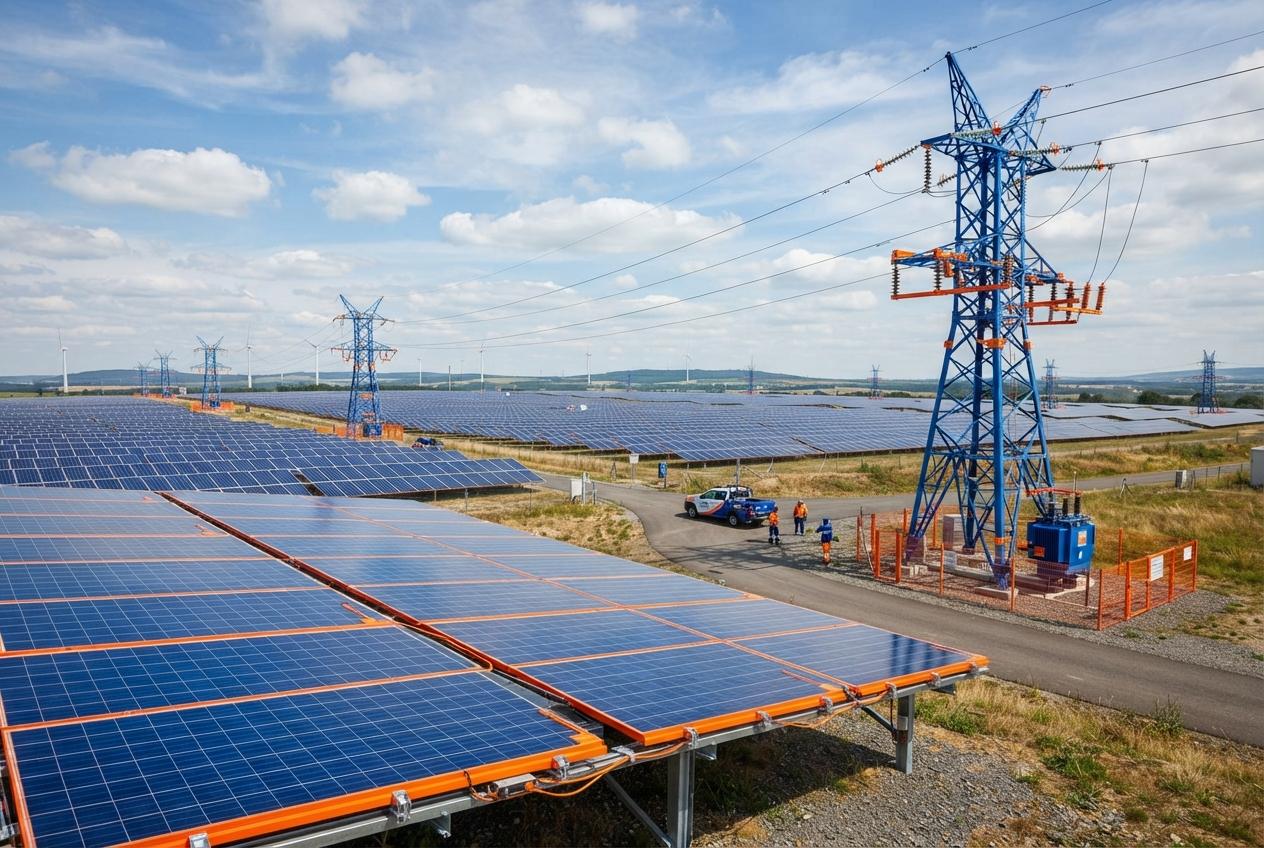
Huawei’s new FusionSolar 9.0 platform aims to revolutionise utility-scale solar projects across the Middle East by integrating advanced grid-forming technology, digital management tools, and lifecycle performance enhancements to meet the region’s evolving energy demands.
Huawei’s Digital Power division has rolled out its FusionSolar 9.0 Smart PV Solution in Dubai, leveraging this regional launch to push a broader message , that solar systems should be capable of doing more than just producing cheap power. As renewable energy deployment gains momentum across the Middle East and Central Asia, the company argues that grid stability, operational intelligence, and long-term reliability are now just as critical as the actual energy output.
The event took place on 15 July during the FusionSolar Technical Innovation Summit, gathering policymakers, utility companies, developers, engineering firms, consultants, and various industry experts. The atmosphere reflected a shift that’s now clear across Gulf power markets: it’s no longer a matter of whether renewables can scale up, but rather how the power grids will stay stable during their expansion.
During the summit, speakers focused on the increasing need for cleaner energy systems that are also flexible enough to respond to fluctuating demand. Aleksi Lumijärvi from the International Renewable Energy Agency (IRENA) highlighted the growing importance of maintaining 24/7 renewable energy models and dispatchable clean power. His comments pointed to an ongoing policy debate in the region, where governments are broadening their focus from just installed solar capacity to systems capable of delivering consistent power , pretty handy, isn’t it?

Meanwhile, Dr Abdulla Ismail from RIT University Dubai discussed the UAE’s renewable energy plans and the technical hurdles involved in integrating larger volumes of variable generation into the national grid. That issue, he noted, is likely to stay at the centre of utility discussions in the Emirates, as solar development moves ahead alongside ambitions to cut emissions and enhance energy security. Nofel Dakhel from SJ Group also provided insight into Oman’s renewable energy roadmap, giving a broader Gulf-wide perspective on these discussions.
Huawei stated that FusionSolar 9.0 is mainly aimed at utility-scale projects. They describe it as a platform that melds string inverter technology, grid-forming functions, digital management tools, and reliability upgrades , all designed to support not only operational efficiency but also system stability. Basically, that positions this product for large solar farms that need to communicate more actively with the grid, rather than just feeding it electricity passively.
Now, grid-forming technology was a big talking point during the event. As solar penetration increases, traditional grids can become a bit tricky to manage because they’re relying more and more on inverter-based resources instead of spinning generators. So, the technical sessions concentrated on how these next-generation systems can help keep voltage and frequency under control within more complicated networks. Dr Carlos Alvarez from Huawei presented advances in this area, including simulation work from Saudi Arabia, validation trials in Germany, and recent technical assessments that have been published.
The summit also showcased regional case studies to illustrate how these ideas are being put into practice. Saleh El Haj Youssef from PowerChina HDEC talked about string inverter use in ADQ projects, while Antonio Diaz from EDF shared experiences from the UAE PV3 project, focusing on plant performance and system design. These examples were intended to show that the regional solar market is shifting into a more technical phase , where the engineering choices and system integration are as important as the raw capacity figures.
Huawei positioned the launch as part of a bigger industrial shift. They mentioned that the Middle East and Central Asia are stepping into a new chapter of renewable development , one where reliability and digital intelligence are becoming core requirements. The company also pointed out that the new platform aims to add value throughout the entire lifecycle of a solar plant, not just at construction or commissioning.
Their focus on lifecycle economics , well, I mean, it’s a pretty important aspect , reflects a wider concern amongst utility solar developers. Large projects aren’t judged solely on initial costs anymore. Performance over decades, maintenance needs, and the ability to sustain yields long-term now really matter. That’s why software, controls, and resilience are increasingly significant to both investors and operators. Huawei has noted in various materials that FusionSolar 9.0 is designed to boost yield and lower the levelised cost of energy over a project’s lifetime.
Following the Dubai launch, similar events were held in other regions, including Europe and Asia-Pacific, which indicates Huawei is positioning FusionSolar 9.0 as a global solution to the overarching issue: how to scale solar while ensuring the grid remains trustworthy. In Asia-Pacific, the company highlighted a rather sizable grid-forming project in the Philippines combining solar power with energy storage. In Europe, they associated the product with concerns about safety, grid integration, and cost efficiency. The Dubai summit essentially brought those themes into a Middle Eastern context, where rapid renewable growth and technical demands are only increasing.
One notable aspect of the event was how it included independent assessments. Nikola Djeric, the associate director at Go2Power, provided an evaluation of Huawei’s string inverter grid-forming capabilities. Pranav Patel from DNV, leading the solar technology and analytics team for Southern Europe, the Middle East, Africa, and Latin America, shared his assessment of long-term performance and reliability. The fact that external reviewers took part was pretty significant , it helped Huawei strengthen its claims with third-party scrutiny.
For the UAE and neighbouring markets, what’s important about this launch is the direction things are heading. It’s not just about deploying solar anymore. Power systems are becoming way more complex, more digital, and increasingly reliant on advanced equipment that can help a network stay stable amid fluctuating renewable output. That makes technologies like grid-forming inverters and digital plant management more relevant than ever for the region’s energy strategies.
Huawei is confidently betting that the next phase of the solar market will value these kinds of capabilities. During the Dubai event, they argued that the future of utility-scale solar in the region depends on systems that combine efficiency with intelligence , that are resilient while also being smart enough to handle the grid’s demands. It’s pretty interesting, right?
- https://www.gccbusinessnews.com/huawei-launches-fusionsolar-9-dubai/ – Please view link – unable to able to access data
- https://www.energetica-india.net/news/huawei-launches-fusionsolar-90-smart-pv-solution-in-dubai-to-enhance-grid-stability – Huawei Digital Power has introduced its FusionSolar 9.0 Smart PV Solution in Dubai, aiming to enhance grid stability as renewable energy deployment accelerates across the Middle East and Central Asia. The launch event, the FusionSolar Technical Innovation Summit, gathered policymakers, utilities, developers, EPC companies, consultants, and industry experts to discuss the region’s energy transition and the need for resilient, intelligent, and stable electricity grids. The summit featured discussions on renewable energy integration and future grid requirements.
- https://digitalpower.huawei.com/en/news/fusionsolar/fusionsolar-9-europe-launch – Huawei Digital Power officially launched the FusionSolar 9.0 Smart PV Solution in Europe at a dedicated summit in Frankfurt, Germany. The event brought together leading utilities, project developers, technical experts, and industry associations from across the continent. The launch marks a significant milestone in Huawei’s smart PV roadmap, addressing challenges such as grid stability, safety, and the imperative of optimising the Levelised Cost of Energy (LCOE) in Europe’s energy transition.
- https://digitalpower.huawei.com/en/news/fusionsolar/fusionsolar9-launch-asia-pacific – Huawei successfully hosted the FusionSolar 9.0 Smart PV Solution APAC Launch in Dongguan, China. The event marked a significant step forward in advancing intelligent, low-carbon energy solutions and reinforced Huawei’s commitment to driving the next phase of solar innovation in the Asia-Pacific region. The launch highlighted grid-forming technology as key to power system stability, citing the world’s largest 3.5GW PV plus 4.5GWh ESS grid-forming project in the Philippines, which achieves 13 hours of stable power supply.
- https://digitalpower.huawei.com/ph/news/fusionsolar/high-renewable-grid-solar – Huawei Digital Power announced the upcoming launch of its new FusionSolar 9.0 Smart PV Solution, designed for utility-scale and large commercial & industrial applications. The solution features industry-leading smart string high-power inverters and new generation smart transformer stations. Notably, the FusionSolar 9.0 Smart PV Solution delivers three key advantages: the industry’s first kV AC solution, the industry’s first grid-forming smart string inverter, and the industry’s maximum 11MW PV array.
- https://digitalpower.huawei.com/en/news/fusionsolar/fusionsolar9-lcoe – Huawei’s FusionSolar 9.0 solution aims to redefine optimal Levelised Cost of Energy (LCOE) for utility-scale solar projects. The company’s new solution boosts yield and reduces LCOE for the full lifecycle of large-scale power plants. Zhang Xingzhong, President of Utility, Commercial & Industrial Solar Business at Huawei Digital Power, highlighted challenges such as return-on-investment considerations over a 20-year lifecycle, ensuring stable grid operation with increased renewable energy integration, and the need for digital solutions to improve operational efficiency.
- https://digitalpower.huawei.com/en/events/fusionsolar9_0-smart-pv-solution-european-launch/ – Huawei Digital Power invited industry leaders, partners, and key stakeholders to the FusionSolar 9.0 Smart PV Solution European Launch in Frankfurt, Germany. The event focused on how innovative technologies are shaping the future of utility-scale renewable energy. Huawei Digital Power shared how FusionSolar 9.0 enables stable grid integration across multiple scenarios, delivers strong investment value, and enhances system safety, reliability, and smart operation and maintenance, supporting the growing role of renewables in modern power systems.
Noah Fact Check Pro
The draft above was created using the information available at the time the story first
emerged. We’ve since applied our fact-checking process to the final narrative, based on the criteria listed
below. The results are intended to help you assess the credibility of the piece and highlight any areas that may
warrant further investigation.
Freshness check
Score:
8
Notes:
The article reports on Huawei’s launch of the FusionSolar 9.0 Smart PV Solution in Dubai on 15 July 2026. This event has been covered by multiple reputable sources, including GCC Business News ([gccbusinessnews.com](https://www.gccbusinessnews.com/huawei-launches-fusionsolar-9-dubai/?utm_source=openai)), Tbreak ([tbreak.com](https://tbreak.com/huawei-bets-gulfs-solar-boom-needs/?utm_source=openai)), and Energetica India Magazine ([energetica-india.net](https://www.energetica-india.net/news/huawei-launches-fusionsolar-90-smart-pv-solution-in-dubai-to-enhance-grid-stability?utm_source=openai)). The earliest known publication date of similar content is 15 July 2026, indicating the information is current. However, the article’s reliance on a single press release from Huawei Digital Power ([gccbusinessnews.com](https://www.gccbusinessnews.com/huawei-launches-fusionsolar-9-dubai/?utm_source=openai)) may limit its originality.
Quotes check
Score:
7
Notes:
The article includes direct quotes from Aleksi Lumijärvi of the International Renewable Energy Agency (IRENA) and Dr. Abdulla Ismail from RIT University Dubai. These quotes appear in the original press release from Huawei Digital Power ([gccbusinessnews.com](https://www.gccbusinessnews.com/huawei-launches-fusionsolar-9-dubai/?utm_source=openai)). No independent verification of these quotes is available online, raising concerns about their authenticity.
Source reliability
Score:
6
Notes:
The primary source of the article is a press release from Huawei Digital Power, which is inherently biased and may lack independent verification. While the article is published on GCC Business News, a regional news outlet, it does not appear to be a major news organisation, which may affect its credibility.
Plausibility check
Score:
8
Notes:
The claims about Huawei’s FusionSolar 9.0 Smart PV Solution addressing grid stability challenges in the Middle East and Central Asia are plausible and align with industry trends. However, the article lacks specific factual anchors, such as names of other companies involved or detailed data, which would strengthen its credibility.
Overall assessment
Verdict (FAIL, OPEN, PASS): REVIEW
Confidence (LOW, MEDIUM, HIGH): MEDIUM
Summary:
The article reports on Huawei’s launch of the FusionSolar 9.0 Smart PV Solution in Dubai on 15 July 2026. While the information is current and plausible, the article’s reliance on a single press release from Huawei Digital Power and the lack of independent verification sources raise concerns about its credibility. The content type being a press release summarised by GCC Business News further limits its originality. Given these factors, a thorough editorial review is recommended before publishing.

