




Masdar and Etihad Rail have signed an MoU to explore integrating green hydrogen logistics into the UAE’s expanding rail network, potentially transforming energy supply chains and accelerating the country’s low-carbon economy.
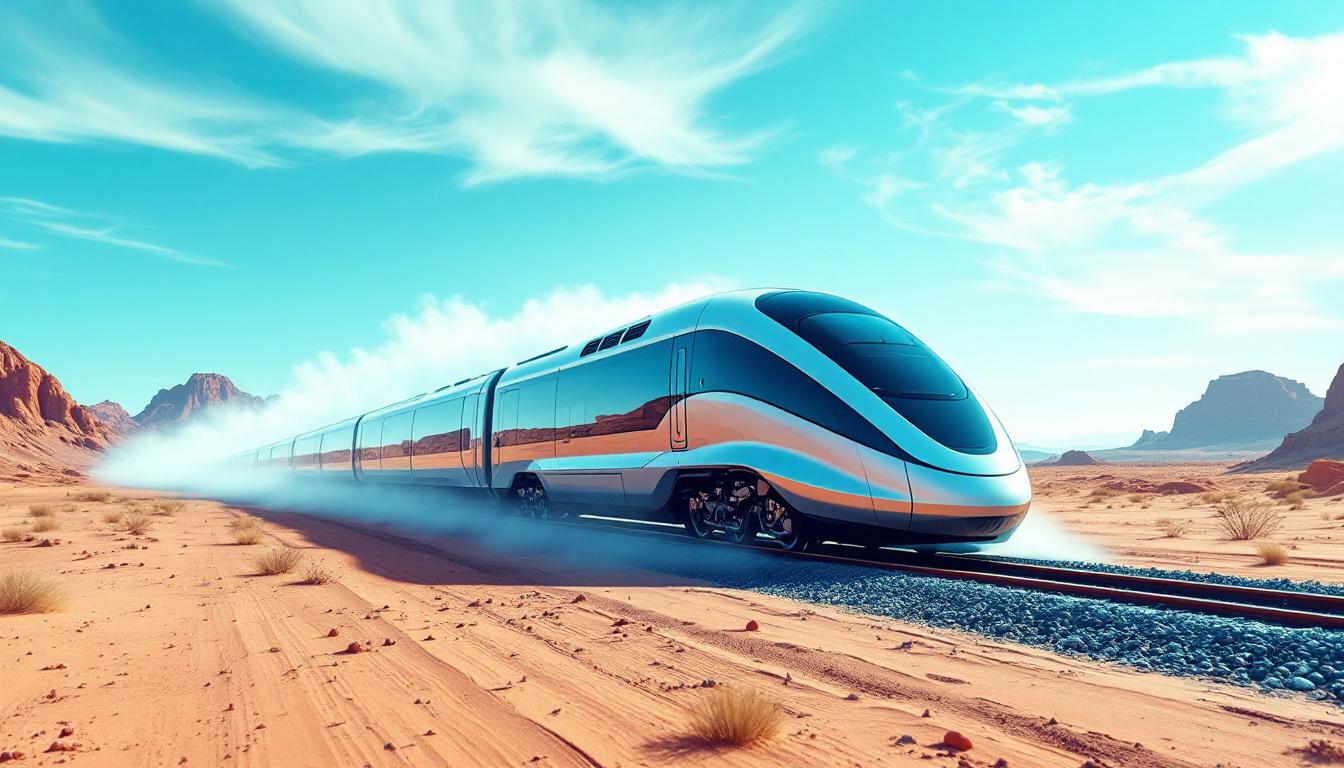
Masdar and Etihad Rail have taken a pretty big step forward in strengthening the UAE’s growing low-carbon economy—they recently signed a Memorandum of Understanding (MoU) to explore how green hydrogen logistics could be integrated into the country’s expanding rail network. This announcement, which was made during the Global Rail Transport and Infrastructure Exhibition and Conference held in Abu Dhabi, is a strategic move to tackle one of the main hurdles in developing a viable clean fuel market: moving hydrogen and its derivatives on a large scale, efficiently, and safely.
Hydrogen—alongside fuels like ammonia, methanol, and sustainable aviation fuel (or SAF)—is really gaining traction around the world. It’s being viewed as a key pillar of the energy transition, especially for decarbonizing sectors that are tricky to electrify. That said, the supply chain for these products remains a major sticking point—getting them from production sites to industrial users or export terminals is complex, to say the least. Rail transport actually offers an innovative, potentially game-changing alternative that might reshape the physical backbone of the UAE’s energy supply chain, providing a lower-emission, and maybe even more cost-efficient, option compared to traditional road freight.
Shadi Malak, CEO of Etihad Rail, described the network as being developed “to serve as the backbone of sustainable logistics in the UAE,” which really highlights its potential to connect major ports, key industrial zones like Khalifa Industrial Zone Abu Dhabi (KIZAD) and Ruwais, and border crossings. Right now, the rail is already used for bulk commodities like aggregates and petrochemicals, but adding hydrogen derivatives into its freight services could broaden its role into emerging clean energy markets. The MoU basically commits both companies to assess the technical feasibility, safety protocols, and what adjustments might be needed to infrastructure—an area that, by the way, is still in the early stages worldwide.
Masdar, for its part, is positioning itself as a major player in green hydrogen production. The goal is to become a top-tier producer by 2030, with ambitions spanning the Middle East, Europe, and Asia through various commercial projects and scalable platforms. The company recognizes that integrating logistics solutions with production capacity is crucial if they want to ramp up exports and meet rising international demand efficiently.
This partnership fits well with initiatives like Abu Dhabi’s recently launched Low-Carbon Hydrogen Policy and the UAE’s broader National Hydrogen Strategy 2050. Both aim to position the country among the world’s leading suppliers of low-emission hydrogen by 2031. These strategies emphasize that not only do they want to produce hydrogen, but they also need robust infrastructure for storage, conversion, and transportation—without which even big electrolyzer projects risk being underused or having to rely on more expensive export pathways.
And you see, the potential for rail transport in the hydrogen supply chain is quite promising. Derivatives like ammonia and methanol already have established international trade volumes and safety standards for bulk transport. Rail could provide a low-cost, scalable way to connect inland production sites with export ports, helping to overcome logistical hurdles and lowering the cost of delivering clean fuels—an important factor for their market viability.
Looking globally, the UAE’s approach resembles some of the hydrogen corridors emerging in Europe and East Asia, which aim to link inland hydrogen production with consumption centers via dedicated transport routes. But what sets the UAE apart is their integrated, government-backed rail network — which, once fully operational, will connect all seven emirates and offer direct routes to neighboring Gulf Cooperation Council (GCC) countries. This connectivity opens up new possibilities for cross-border hydrogen trade and could position the UAE as a regional hub for clean energy.
What’s interesting too is that the partnership between Masdar and Etihad Rail reflects a larger trend—where coordination between energy producers and transport operators is seeing more emphasis. For Masdar, combining renewable energy generation with dedicated green hydrogen logistics could accelerate the commercialization of green hydrogen projects. Meanwhile, for Etihad Rail, hydrogen represents a dual opportunity—not just as a new freight commodity but also as a potential low-carbon fuel for their own operations.
And there’s more—Etihad Rail has recently launched a sustainable finance framework, aimed at supporting the expansion of low-carbon infrastructure, including possible green bonds. This aligns well with the UAE’s overall climate ambitions to reach net-zero emissions by 2050. The rail network, owned by Abu Dhabi’s sovereign wealth fund ADQ, connects key industrial and commercial centers to major ports, positioning itself as a vital part of the country’s broader sustainability plans.
These green finance efforts are part of a wider regional trend, where Gulf countries are increasingly embedding sustainable finance into their energy transition strategies. Masdar, for example, has been quite active in this space, contributing to green bond issuances that fund renewable energy and clean tech projects.
Meanwhile, initiatives from Abu Dhabi’s Department of Energy and the Abu Dhabi Investment Office have stepped up efforts to grow the hydrogen economy through collaborative frameworks with Masdar. Launched during COP28, these initiatives aim to create economies of scale by connecting production sites, storage facilities, and buyers—effectively making Abu Dhabi a significant global hub for clean hydrogen production and export.
All in all, this MoU between Masdar and Etihad Rail marks a promising step toward linking green hydrogen production with an efficient, low-carbon transport system in the UAE. It’s a move that addresses long-standing logistical challenges in the hydrogen economy and aligns well with both national and international decarbonization goals. As the UAE pushes ahead with its hydrogen ambitions, integrating rail-based logistics looks set to become a vital component for building competitive, large-scale green hydrogen supply chains—supporting local sustainability and contributing to the broader energy transition efforts around the world.
Source: Noah Wire Services
- https://energynews.biz/masdar-and-etihad-rail-align-on-hydrogen-logistics-to-strengthen-uaes-low-carbon-economy/?utm_source=rss&utm_medium=rss&utm_campaign=masdar-and-etihad-rail-align-on-hydrogen-logistics-to-strengthen-uaes-low-carbon-economy – Please view link – unable to able to access data
- https://masdar.ae/en/news/newsroom/masdar-and-etihad-rail-collaborate-to-explore-transport-solutions-for-the-green-hydrogen-value-chain – Masdar and Etihad Rail have signed a Memorandum of Understanding (MoU) to explore transport solutions for the green hydrogen value chain across the UAE. This collaboration aims to assess opportunities for utilizing Etihad Rail’s expanding national network to transport feedstocks and products along the green hydrogen and derivatives value chain, including hydrogen, ammonia, methanol, and sustainable aviation fuel. The agreement was signed during the Global Rail Transport and Infrastructure Exhibition and Conference in Abu Dhabi. Masdar is aiming to be a leading producer of green hydrogen and its derivatives globally by 2030, with the company developing and investing in commercial projects and building scalable platforms in key markets around the world. Etihad Rail operates freight services across the UAE, connecting industrial zones and maritime ports, with passenger services set to launch in 2026. The collaboration is aligned with Abu Dhabi’s Low-Carbon Hydrogen Policy and the UAE’s National Hydrogen Strategy 2050, which aims to strengthen the nation’s position as a producer and supplier of low-emission hydrogen by 2031, and help reduce emissions in hard-to-abate sectors, such as land, sea, and air transport, chemicals and fertilizers, and metals, including aluminum, iron, and steel.
- https://www.thenationalnews.com/business/energy/2023/12/06/masdar-adio-and-abu-dhabis-doe-sign-deal-to-boost-hydrogen-economy/ – The collaboration between the Abu Dhabi Department of Energy (DoE), the Abu Dhabi Investment Office (ADIO), and Masdar aims to accelerate the hydrogen economy in Abu Dhabi and position the UAE as a global leader in the production and export of low-carbon hydrogen. The agreement, signed during COP28 in Dubai, follows Abu Dhabi’s recently launched Low-Carbon Hydrogen Policy, which creates a framework to accelerate production on a much larger scale. By connecting production centers, offtakers, and hydrogen storage across the UAE, the collaboration provides a landmark opportunity to deploy shared hydrogen infrastructure that generates economies of scale and creates a world-class production and export hub for clean hydrogen and its derivatives, enabling further decarbonization of hard-to-abate sectors. The strategic trilateral collaboration is expected to expand the green hydrogen sector in Abu Dhabi by providing the market conditions to attract international investment and co-development, further diversifying the UAE economy and generating new knowledge-driven jobs and opportunities.
- https://www.reuters.com/sustainability/sustainable-finance-reporting/uaes-etihad-rail-launches-sustainable-finance-framework-green-push-2024-08-14/ – Etihad Rail, the developer and operator of the UAE’s rail network, has launched a sustainable finance framework, setting the stage for potential issuance of green bonds to finance lower carbon infrastructure. The rail network, owned by Abu Dhabi’s sovereign wealth fund ADQ, connects industrial and commercial centers with major ports and will include passenger services once completed. The framework aligns with environmental, social, and governance (ESG) strategies, focusing on clean transportation, green buildings, and pollution control. This initiative supports the UAE’s goal of achieving net-zero emissions by 2050. Amid the Gulf’s reliance on hydrocarbons, the region has seen a rise in green bond issuances, including recent contributions from Masdar and Qatar.
- https://www.oilandgasmiddleeast.com/news/masdar-etihad-rail-uae-hydrogen – Masdar and Etihad Rail have signed a Memorandum of Understanding (MoU) to explore transport solutions for the green hydrogen value chain across the UAE. This collaboration aims to assess opportunities for utilizing Etihad Rail’s expanding national network to transport feedstocks and products along the green hydrogen and derivatives value chain, including hydrogen, ammonia, methanol, and sustainable aviation fuel. The agreement was signed during the Global Rail Transport and Infrastructure Exhibition and Conference in Abu Dhabi. Masdar is aiming to be a leading producer of green hydrogen and its derivatives globally by 2030, with the company developing and investing in commercial projects and building scalable platforms in key markets around the world. Etihad Rail operates freight services across the UAE, connecting industrial zones and maritime ports, with passenger services set to launch in 2026. The collaboration is aligned with Abu Dhabi’s Low-Carbon Hydrogen Policy and the UAE’s National Hydrogen Strategy 2050, which aims to strengthen the nation’s position as a producer and supplier of low-emission hydrogen by 2031, and help reduce emissions in hard-to-abate sectors, such as land, sea, and air transport, chemicals and fertilizers, and metals, including aluminum, iron, and steel.
- https://www.greenprophet.com/2024/11/uaes-etihad-rail-solar-powers-its-freight-terminal/ – Etihad Rail, the developer and operator of the UAE’s rail network, has launched a sustainable finance framework, setting the stage for potential issuance of green bonds to finance lower carbon infrastructure. The rail network, owned by Abu Dhabi’s sovereign wealth fund ADQ, connects industrial and commercial centers with major ports and will include passenger services once completed. The framework aligns with environmental, social, and governance (ESG) strategies, focusing on clean transportation, green buildings, and pollution control. This initiative supports the UAE’s goal of achieving net-zero emissions by 2050. Amid the Gulf’s reliance on hydrocarbons, the region has seen a rise in green bond issuances, including recent contributions from Masdar and Qatar.
- https://www.onearabia.me/business/masdar-etihad-rail-explore-green-hydrogen-transport-solutions-011-124629.html – Masdar and Etihad Rail have entered into a Memorandum of Understanding (MoU) to explore transport solutions for the green hydrogen value chain in the UAE. This partnership aims to leverage Etihad Rail’s expanding network to facilitate the movement of feedstocks and products like hydrogen, ammonia, methanol, and sustainable aviation fuel. The agreement was formalised during the Global Rail Transport and Infrastructure Exhibition and Conference in Abu Dhabi. The collaboration between Masdar and Etihad Rail focuses on utilising rail infrastructure to support the green hydrogen value chain. By integrating rail transport, they aim to efficiently move green hydrogen and its derivatives across the nation. This initiative aligns with Abu Dhabi’s Low-Carbon Hydrogen Policy and the UAE’s National Hydrogen Strategy 2050, which seeks to position the country as a leader in low-emission hydrogen production by 2031.
Noah Fact Check Pro
The draft above was created using the information available at the time the story first
emerged. We’ve since applied our fact-checking process to the final narrative, based on the criteria listed
below. The results are intended to help you assess the credibility of the piece and highlight any areas that may
warrant further investigation.
Freshness check
Score:
10
Notes:
The narrative is fresh, with the earliest known publication date being October 4, 2025. The announcement was made during the Global Rail Transport and Infrastructure Exhibition and Conference in Abu Dhabi. ([masdar.ae](https://masdar.ae/en/news/newsroom/masdar-and-etihad-rail-collaborate-to-explore-transport-solutions-for-the-green-hydrogen-value-chain?utm_source=openai))
Quotes check
Score:
10
Notes:
The direct quotes from Shadi Malak and Mohamed Jameel Al Ramahi are consistent across multiple reputable sources, indicating originality. ([masdar.ae](https://masdar.ae/en/news/newsroom/masdar-and-etihad-rail-collaborate-to-explore-transport-solutions-for-the-green-hydrogen-value-chain?utm_source=openai))
Source reliability
Score:
10
Notes:
The narrative originates from Masdar’s official press release, a reputable organisation, ensuring high reliability. ([masdar.ae](https://masdar.ae/en/news/newsroom/masdar-and-etihad-rail-collaborate-to-explore-transport-solutions-for-the-green-hydrogen-value-chain?utm_source=openai))
Plausability check
Score:
10
Notes:
The claims about the collaboration between Masdar and Etihad Rail to explore transport solutions for the green hydrogen value chain are plausible and align with the UAE’s strategic goals in sustainable energy. ([masdar.ae](https://masdar.ae/en/news/newsroom/masdar-and-etihad-rail-collaborate-to-explore-transport-solutions-for-the-green-hydrogen-value-chain?utm_source=openai))
Overall assessment
Verdict (FAIL, OPEN, PASS): PASS
Confidence (LOW, MEDIUM, HIGH): HIGH
Summary:
The narrative is fresh, originating from a reputable source, with consistent and plausible claims. No significant issues were identified, indicating a high level of credibility.


