

 2:38 pm - September 29, 2026
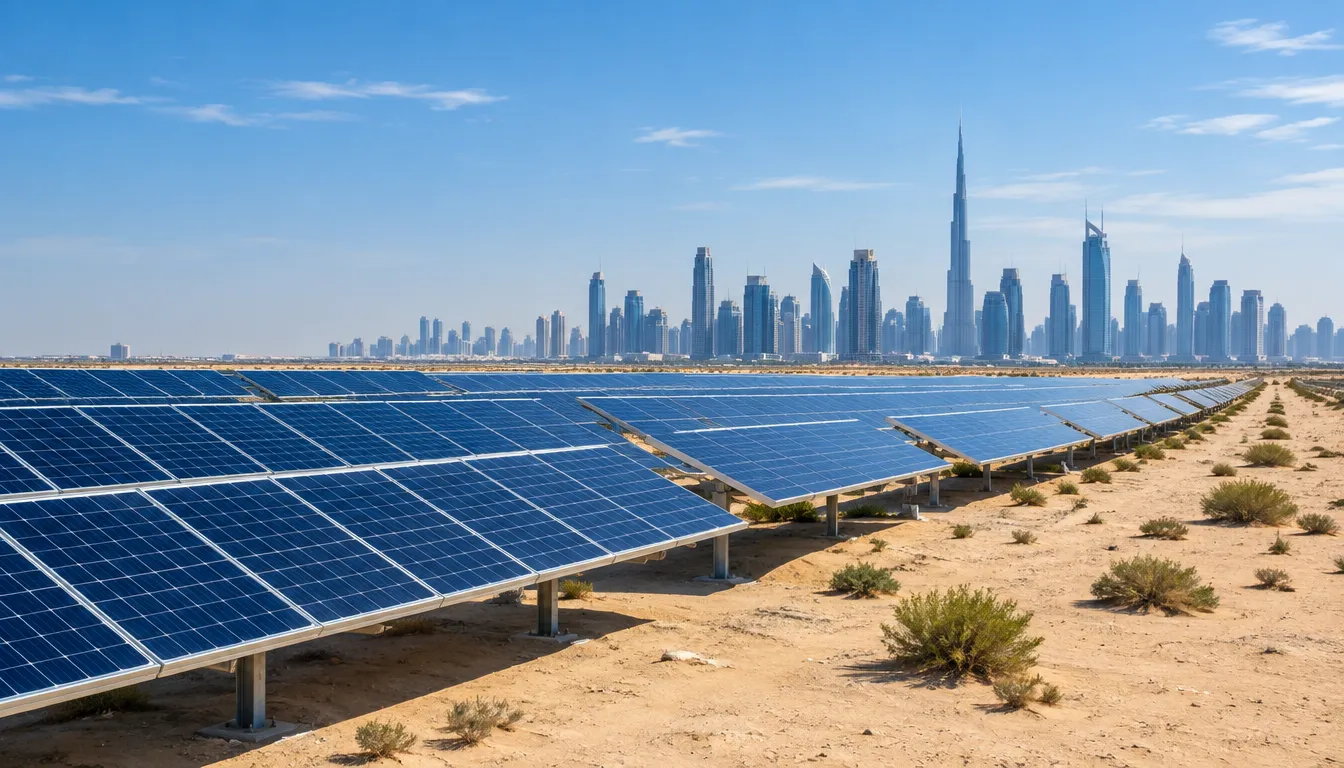
Abu Dhabi Fund for Development has published a roadmap showing how its UAE climate finance partnerships have mobilised billions of dollars for renewable energy projects across emerging economies.
The Abu Dhabi Fund for Development (ADFD) has published a roadmap setting out how it plans to scale UAE climate finance and draw more capital into the global energy transition, building on partnerships that have already mobilised billions of dollars for renewable energy projects.
The knowledge paper, titled “Investing in a Sustainable Future: ADFD’s Climate Initiatives,” argues that reaching a net-zero global economy by 2030 will require $7.6 trillion in annual investment, and sets out how development finance institutions can act as catalysts in reducing investment risk and mobilising private capital for long-term climate projects.
ADFD’s partnership with the International Renewable Energy Agency has mobilised around $350 million across 26 renewable energy projects, benefiting roughly 4.5 million people. The fund said the partnership shows how blended financing models can bridge the gap between available public funds and the scale of investment emerging economies need.
Its Energy Transition Accelerator Financing Platform, which connects project developers with funding partners and technical support, has generated $4 billion in funding pledges since launch and backed 92 projects representing 6.2 GW of renewable capacity. ADFD said the platform is designed to move projects from early-stage development through to bankable, investable assets.
A separate $1.5 billion cooperation framework between ADFD and the International Finance Corporation focuses on climate and food security priorities across Africa, Asia, Latin America, the Caribbean and the Pacific, extending the fund’s reach well beyond the Gulf.

The roadmap positions ADFD alongside other Abu Dhabi institutions expanding their climate work, including First Abu Dhabi Bank’s push towards its own climate finance target, as the emirate builds out a wider UAE climate finance ecosystem ahead of upcoming international climate commitments.
For UAE-based climate tech developers and project sponsors, the roadmap signals that ADFD intends to keep expanding the financing instruments and partnerships available to move renewable energy and climate resilience projects from concept to construction.
ADFD frames blended finance as the practical answer to a persistent problem in emerging-market renewable energy: commercial lenders often see early-stage projects as too risky to fund alone, even when the underlying technology is proven. By absorbing some of that risk itself, or sharing it with partners such as IRENA and the IFC, the fund is designed to bring in private capital that would otherwise stay on the sidelines.
The roadmap also positions Abu Dhabi as a hub for climate finance expertise rather than only a source of capital, with ADFD publishing its methodology and case studies for other development finance institutions to reference. That knowledge-sharing role complements the emirate’s growing cluster of climate-focused funds, banks and advisory firms, each targeting a different segment of the financing gap between early-stage project development and full commercial bankability.
The $7.6 trillion annual investment figure ADFD cites for a net-zero global economy by 2030 underlines the scale mismatch between what governments and development banks can provide directly and what the transition actually needs, which is the argument ADFD uses to justify its blended and catalytic financing approach rather than direct grant funding alone. Every dollar of concessional or first-loss capital ADFD commits is intended to draw in a multiple of that amount from commercial investors who would not otherwise take on early-stage project risk.
ADFD’s geographic spread, from renewable energy projects mobilised with IRENA to the Africa, Asia, Latin America, Caribbean and Pacific focus of its IFC framework, also reflects a deliberate strategy of diversifying beyond the Gulf and building relationships with governments and developers in markets where UAE climate technology exporters and project developers may later find opportunities of their own.
The scale of the figures involved shows how far UAE climate finance has moved beyond domestic renewable energy projects to become a tool of foreign policy and economic diplomacy, with ADFD’s balance sheet increasingly used to open doors for other UAE institutions and companies operating abroad.

