

 7:50 am - November 17, 2026

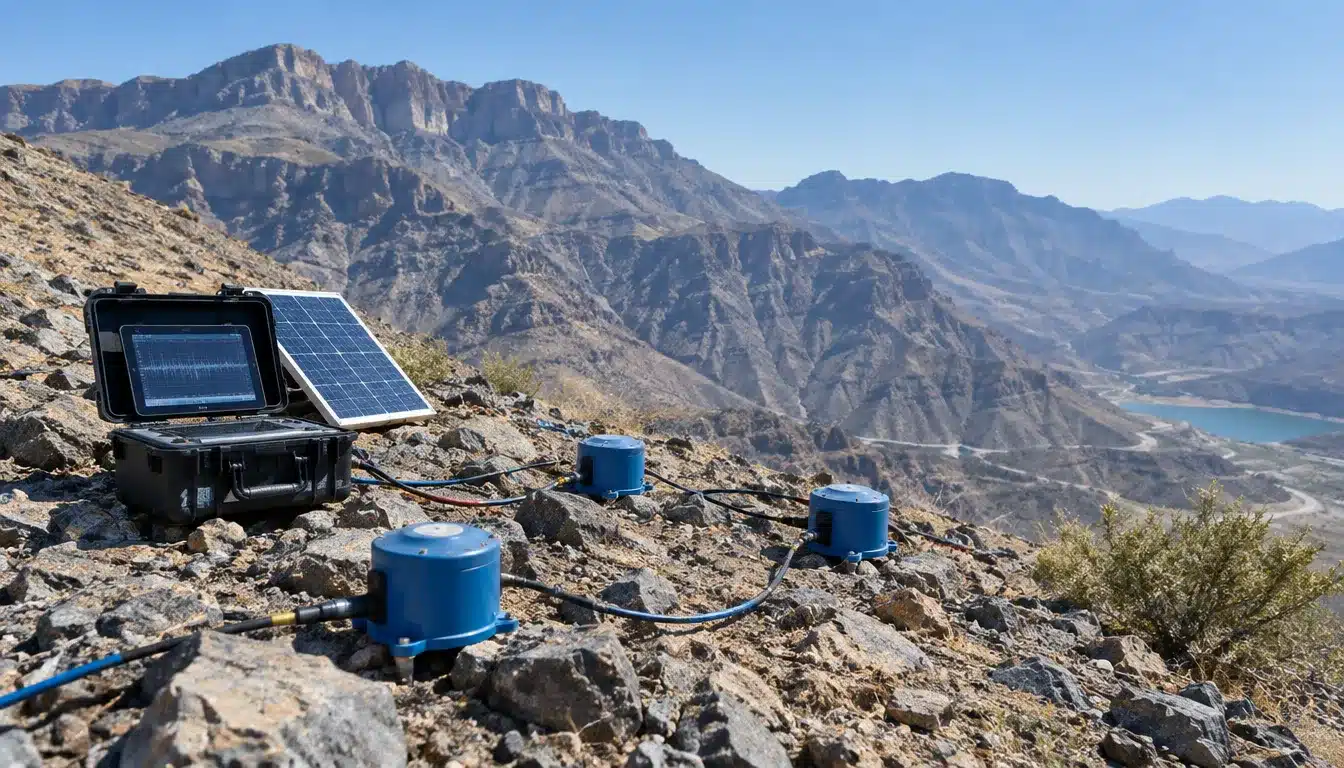
Mantle8 has begun natural hydrogen exploration in Ras Al Khaimah under an exclusive negotiating right, with a survey of up to 24 months and more than 1,000 passive seismic sensors planned.
French explorer Mantle8 has started fieldwork on natural hydrogen exploration in Ras Al Khaimah, which the company describes as the UAE’s first dedicated programme of its kind. The work follows an agreement with the Ras Al Khaimah Department of Energy (DOE).
Under the agreement, Mantle8 holds an exclusive right to negotiate an exploration contract for Block 7. The programme runs for up to 24 months. It begins with delineation of the survey area, ahead of more than 1,000 passive seismic sensors in the Hajar Mountains. The company announced the programme on 2 November and funds the work itself.
Mantle8 has opened a permanent office in Dubai to support its Middle East operations. Jean-Valery Garcia became Regional Director, Middle East, in September 2026. Ras Al Khaimah sits at the northern end of the Semail Ophiolite, a major exposed section of oceanic crust. According to Mantle8, ultrabasic rocks, active fault systems and observed hydrogen seeps are geological indicators that warrant further investigation. Natural hydrogen forms through processes inside the Earth’s crust.
The company will use its HOREX 4D passive seismic imaging technology alongside GeoLogix and APoGeH. Teams will also sample gas, water and rock and analyse existing subsurface data. The first stage is non-invasive and involves no drilling. Emmanuel Masini, founder and chief executive of Mantle8, said: “Ras Al Khaimah offers an exceptional geological setting for natural hydrogen exploration.” He added that the company’s geological work points to additional mantle formations at depth.
Garcia said in an interview that the right to negotiate gives Mantle8 exclusivity over the block for a defined period. If the data confirms the potential, Mantle8 and the DOE will negotiate a full exploration agreement. Any drilling commitment would sit under that agreement. “During the exclusivity period, we will deploy our technology stack to confirm the potential and define potential drilling targets,” Garcia said.
Costs remain open. Garcia gave no cost per kilogramme against green or blue hydrogen, saying it is too early. Costs will depend on flow rate, purity, depth and distance to end users, he said. Mantle8 did not disclose the survey cost or the size of the block.
Garcia argued that natural hydrogen needs no electrolysis electricity, water, gas feedstock or carbon capture. He said it uses techniques the oil and gas industry already knows. He said that gives it the potential to become the lowest-cost, lowest-carbon form of hydrogen. It could supply industries that already consume hydrogen, such as refining, ammonia and chemicals, he said. It would also complement the UAE’s National Hydrogen Strategy. Commercial use needs clear title to the resource, which the full exploration agreement would give. It also needs nearby purification, storage and end users.
The agreement sets a framework to move natural hydrogen exploration from data collection towards a possible commercial agreement for exploratory drilling and development. Any later activity depends on the findings and a further agreement between the parties. The commercial potential of natural hydrogen exploration at the site has yet to be established.
Founded in 2019 and based in Grenoble, Mantle8 completed a €31 million Series A round in 2026. Its portfolio spans Europe, North Africa and the Middle East. The UAE programme adds to the region’s emerging natural hydrogen industry. A chamber report has also put the UAE among the lowest-cost hydrogen producers by 2030.

