

 10:43 am - October 15, 2026
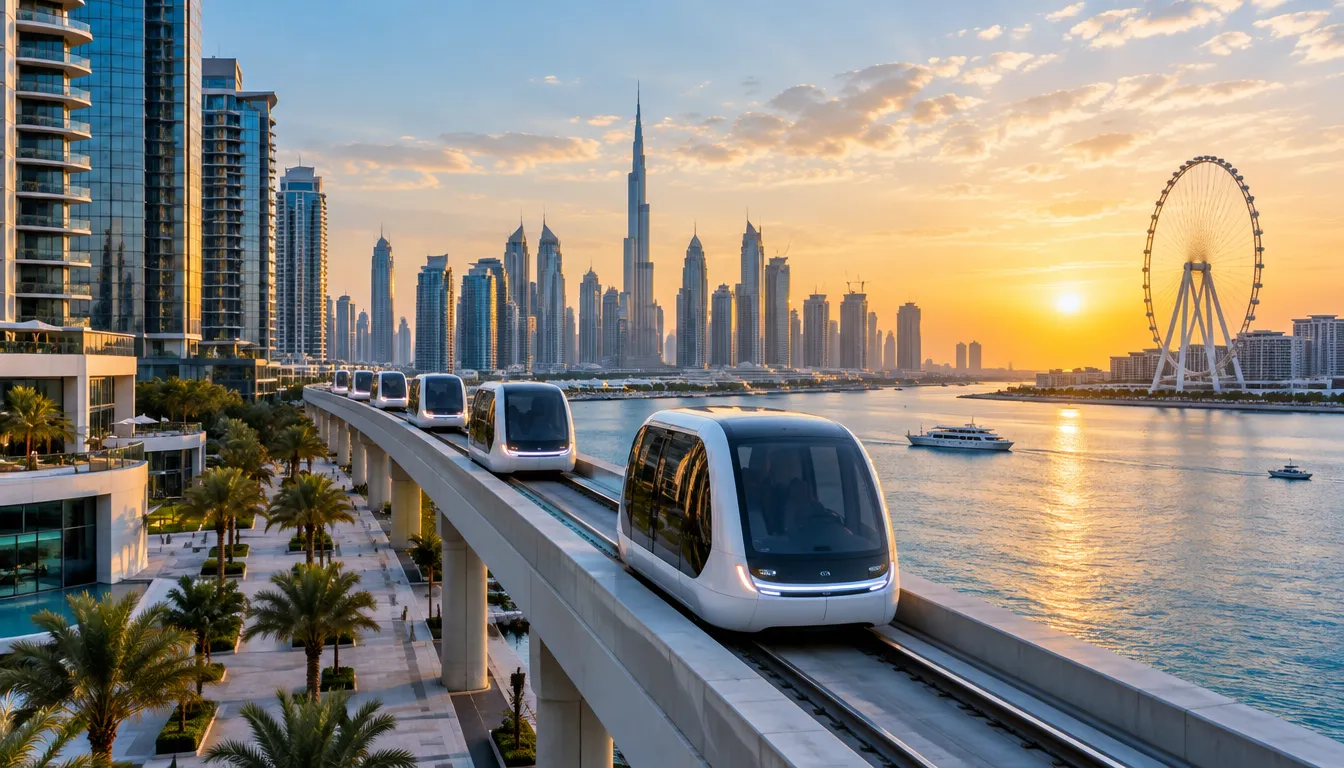
Dubai’s Roads and Transport Authority has begun a four-week Dubai autonomous transit trial at Bluewaters, testing driverless electric pods on a dedicated guideway that could shape future clean mobility links across the emirate.
Dubai’s Roads and Transport Authority (RTA) announced on 11 October the start of a four-week trial of the Glydways automated transit system at Bluewaters. The pilot puts Dubai autonomous transit on a dedicated guideway in front of passengers at Bluewaters. RTA Director-General Mattar Al Tayer took the first five-minute ride.
RTA is running the trial under a public-private partnership with Dubai Holding. Dubai Holding provides the test environment, infrastructure and operational support at the Bluewaters site. The authority said the Dubai autonomous transit trial will assess vehicle performance, autonomous driving, safety, reliability and passenger experience. Bluewaters is a Dubai Holding destination, which gives the authority a contained site to test the technology before any wider rollout.
How the pods work
Each electric pod in the Dubai autonomous transit fleet carries four to six passengers and travels at up to 50 km/h. A single charge gives a range of up to 250 km. Every vehicle carries 20 high-resolution lidar sensors, along with radar and HD cameras.
The system links vehicles into virtual convoys. Gaps between pods can fall below one second. Developers say that spacing lets the network move more than 20,000 passengers an hour in both directions on a single guideway.
The sensor package supports the autonomous driving function. Lidar builds a three-dimensional picture of the guideway, while radar and cameras add further cover. The four-week trial gives RTA a first view of how that hardware performs in Dubai conditions.

Glydways, founded in 2016, also claims capital costs up to 90% lower and operating costs up to 70% lower than comparable transport modes. RTA has not published the basis for those comparisons or any results from the Bluewaters trial. Readers should treat the figures as developer claims until the trial data emerges.
Proposed routes and integration
The trial site sits on a proposed 2.8 km route between National Paints Metro Station and Bluewaters. RTA described that connection as under study. Other routes under study would serve Jumeirah Village Circle, Dubai Festival City, Business Bay and Mohammed Bin Rashid City.
Al Tayer said the trial will explore how the system could connect with public transport, especially for first and last-mile journeys. Those are the short legs between a metro station and a final destination. A fleet of electric pods could give passengers another option on them.
Mark Seeger, Glydways founder and co-CEO, said Dubai offers an advanced environment for testing future mobility solutions. He said the trial results will help assess and improve the system. RTA has not said how many people will ride during the four weeks.
The pilot adds to a run of Dubai mobility projects. RTA is preparing to host the Dubai electric vehicle exhibition from 10 to 12 November. The emirate also opened registration for its 2025 World Congress to advance autonomous transport innovations.
For the UAE climate tech sector, the trial tests whether small electric vehicles can run reliably in a dense Dubai district. The four-week data will inform decisions on expanding the network across the emirate. RTA has not set a date for commercial operation or announced fares. Any expansion of Dubai autonomous transit will depend on those results.
Investors and operators will watch the safety and reliability findings most closely. A positive result would strengthen the case for electric autonomous transit as a complement to Dubai’s metro and bus network. The cost claims need independent confirmation before they can guide any large capital decision, and RTA has yet to say when it will publish findings.

