

 2:37 pm - September 29, 2026
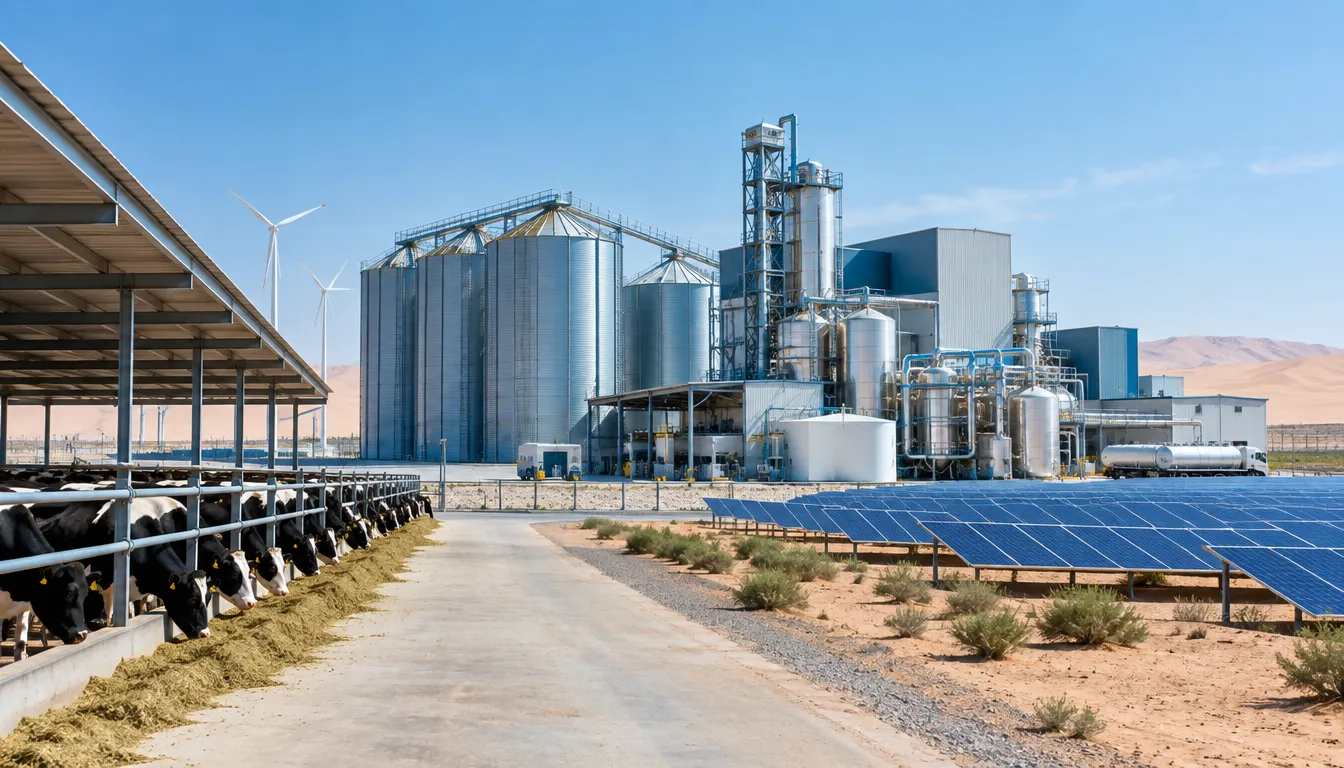
Sharjah’s IKTIFA has opened an organic fertiliser plant using patented New Zealand technology at Mleiha Dairy Farm, turning farm waste into a UAE circular economy project for sustainable agriculture.
The Sharjah Corporation for Agricultural and Livestock Production (IKTIFA) has opened an organic fertiliser processing plant at Mleiha Dairy Farm, adding a new UAE circular economy project that turns farm waste into high-purity fertiliser.
Dr Khalifa Musabah Al Tunaiji, chief executive of IKTIFA, announced the launch while hosting the Ambassador and Consul of New Zealand on a visit to the farm. He said the plant uses patented technology from a leading New Zealand company to produce fertiliser that is both high-purity and completely odourless, a step he described as a significant leap in processing and recycling food-production by-products.
Al Tunaiji said the project reflects IKTIFA’s and Mleiha Dairy Farm’s commitment to keeping pace with global scientific and technological advances in food production and sustainable agriculture, strengthening the UAE’s food security ecosystem in the process.
The visit also included discussions on deepening investment and technical cooperation between IKTIFA and the New Zealand Embassy and Consulate, drawing on New Zealand’s expertise in the dairy sector and in agricultural technology development. IKTIFA did not disclose the plant’s processing capacity or investment value.
The plant adds to a growing list of UAE circular economy projects converting organic and food waste into usable products rather than sending it to landfill. It follows other Sharjah and Abu Dhabi initiatives to recycle agricultural and industrial by-products, including a Dubai biotech start-up’s work turning date palm waste into climate-smart fertilisers and the recent upgrade of the Al Ain Material Recovery Facility.

For the UAE’s dairy and agriculture sector, the plant offers a working example of how by-product streams can be processed domestically rather than exported or discarded, supporting the wider push to build a more circular UAE food production system.
The launch sits within Sharjah’s broader effort to strengthen local food production under the UAE’s National Food Security Strategy 2051, which pushes emirates to reduce reliance on imported inputs such as fertiliser by developing domestic processing capacity. Odourless processing is also important for a plant operating on a working dairy farm, where controlling smell and emissions is central to keeping the wider site compliant with environmental standards.
Turning dairy and agricultural by-products into a saleable input rather than a waste-disposal cost is also consistent with the direction set by the UAE’s Circular Economy Policy, which targets higher domestic recycling and materials-recovery rates across agriculture, construction and manufacturing. A working fertiliser plant on an active farm gives IKTIFA a live reference site it can point to when discussing further circular-economy investment with international partners such as New Zealand.
Mleiha Dairy Farm itself functions as a working demonstration site for Sharjah’s agricultural sector, and pairing it with an on-site fertiliser plant means the farm’s own waste can be processed close to where it is generated, rather than trucked elsewhere for treatment. That kind of closed-loop set-up is generally cheaper to run and easier to monitor for environmental compliance than sending organic waste to a separate, centralised facility.
IKTIFA has not said whether it plans to replicate the plant at other Sharjah farms or license the New Zealand technology more widely, but Al Tunaiji’s comments on deepening cooperation with the New Zealand Embassy suggest further agreements could follow if the pilot performs well.
New Zealand has built a global reputation in dairy-sector technology given the scale of its own pasture-based dairy industry, making it a natural technical partner for a UAE operator looking to process dairy farm waste to a high standard. For IKTIFA, the relationship offers a route to imported know-how while the finished fertiliser itself is produced, marketed and used domestically, keeping the value of the process within the UAE’s own agricultural supply chain.
The Mleiha plant is a small but concrete example of how the UAE circular economy agenda is playing out on individual farms, one processing line at a time, rather than only in national strategy documents.

