

 7:45 pm - September 20, 2026
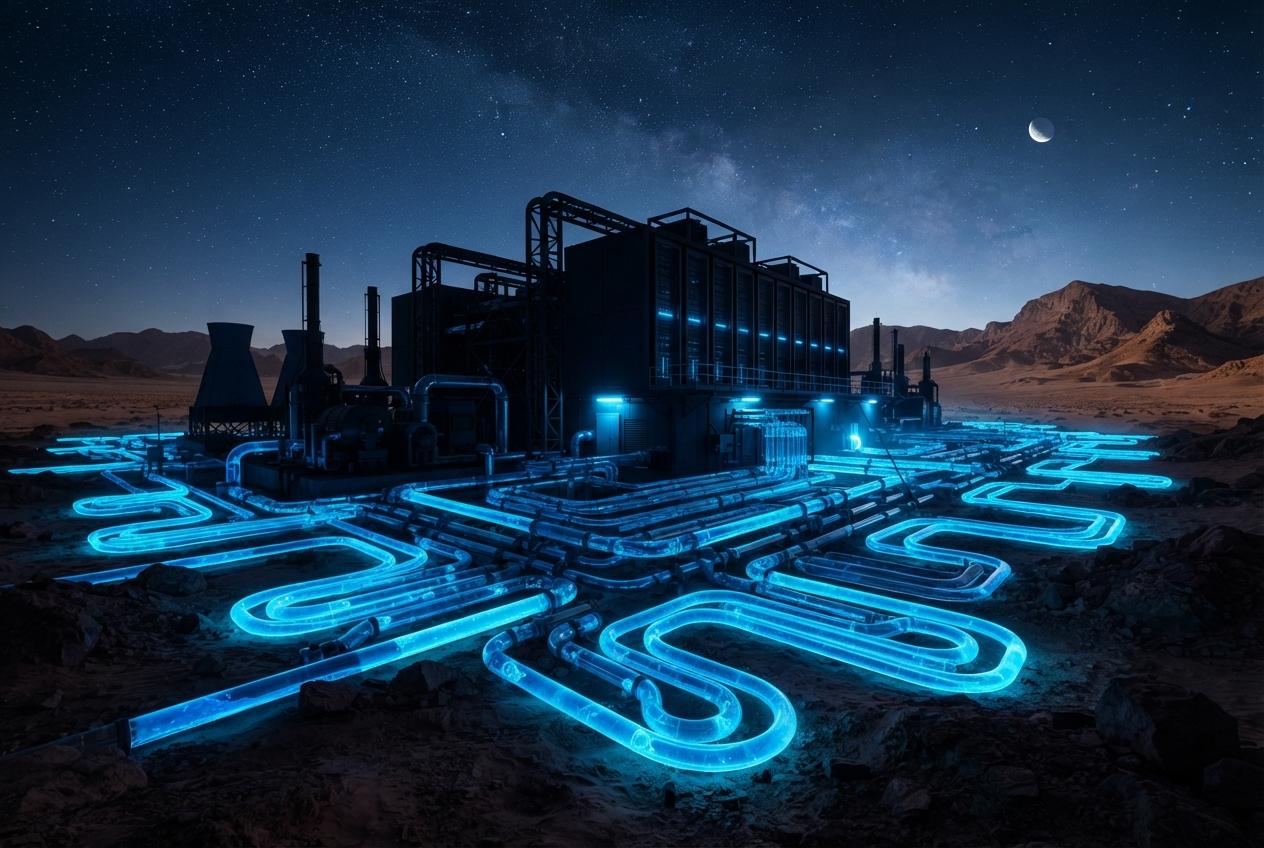
As AI workloads intensify in the Middle East and South Asia, data centre operators are adopting innovative cooling methods, including liquid and hybrid systems, tailored to harsh climates and high-density demands, transforming regional infrastructure strategies.
Across the Middle East, South Asia, and parts of South-east Asia, data centre operators are now being pushed towards a pretty new kind of cooling playbook. As AI workloads push racks to much higher densities, traditional air cooling is really starting to struggle , I mean, it’s fighting a losing battle with the heat, water pressure, and the reliability demands of hotter climates.
This change is especially obvious in places like the Gulf, where outside temperatures can easily soar past 45°C, and where dust, solar gain, and humidity all make thermal management a real headache. Industry insiders, especially telecoms and building-services specialists, suggest that in such tough conditions, standard air-based systems tend to give poor efficiency and lead to rising operational costs. In some desert-based setups, reports indicate that power usage effectiveness (PUE) can go above 1.8, which, if you ask me, is pretty unfavourable compared to the global average.
That’s actually speeding up the adoption of liquid cooling, direct-to-chip systems, immersion cooling, and hybrid setups that combine air and liquid methods. These approaches are much better suited for AI inference and training clusters, which can load individual cabinets with some serious thermal demands. They also give data halls the ability to support higher power densities without needing a complete redesign of the entire building right away.

At Gulf Data Hub, their chief information officer, Himmath Mohammad, talks about cooling as part of a broader facility strategy rather than just a standalone engineering problem. His team believes that planning should start with predicting how rack density might evolve, then carefully choosing between air, hybrid, and liquid architectures. Modular expansion and long-term resilience are also key considerations. The aim, he says, is to optimise energy performance without compromising uptime or ending up with costly retrofits down the track.
The same kind of thinking is shaping investment decisions elsewhere in the region too. Take Saudi Arabia, for example: DataVolt plans to use seawater for all its heat rejection at its new AI factory in NEOM. They say that about 70% of the liquid-cooled load will be rejected directly to seawater through plate heat exchangers, while the other part, cooled by air, will rely on water-cooled chillers whose condenser heat is also sent off to seawater. This approach clearly reflects a broader search for cooling solutions that fit the local landscape, rather than just copying what’s worked elsewhere.
But moving to liquid cooling isn’t just a simple swap of one tech for another. Industry watchers like TelecomReview point out that desert data centres need equipment specifically designed to handle sand, hot sun, and big temperature swings. Precise plumbing, leak prevention, and durable materials become even more important when operating in such harsh environments. Resilience of the structure itself matters too , because thermal expansion and dust ingress can slowly chip away at performance over time, which, you see, is quite a concern.
The coastal Gulf markets face similar challenges, but with humidity thrown into the mix, making life even more complicated. A recent panel discussion at DCD>Connect Live MENA focused on whether standard cooling strategies are enough for regional conditions. The general consensus? No, they aren’t. Operators need tailored solutions that match the local climate, power availability, and water constraints, each site being different.
Over in India, Nxtra by Airtel is taking a flexible approach. They design hyperscale facilities that can handle air cooling, liquid cooling, direct-to-chip systems, and immersion tech. Their CEO, Ashish Arora, argues that data centre design in India shouldn’t be just about keeping servers cool , it’s also about sustainability, dealing with extreme weather, network access, and power issues. Nxtra even conducts water-stress assessments and aims for zero liquid discharge, showing how cooling strategies are increasingly linked to resource management.
South-east Asia, on the other hand, faces a different , but still demanding , environment. In Singapore and Indonesia, the high humidity really limits how effective free cooling can be, since outside conditions aren’t always favourable. Ng See Kian, senior director of mechanical engineering at ST Telemedia GDC, explains that this pushes operators towards internal mechanical chilling and more sophisticated heat rejection cycles. STT GDC is now using air-cooled chillers and closed-loop systems for their newer builds, aiming for high efficiency without putting too much strain on freshwater supplies.
They’re also taking a modular approach to design, leaving future cooling options open. According to their engineering team, new halls are designed to support both air and liquid cooling, with water available around the edges of each hall for flexibility. That actually matters quite a lot in markets where customer needs change quickly , and where AI readiness influences just about every major decision.
For operators operating across all these regions, the trade-offs are becoming clearer. Water efficiency often comes at the cost of energy efficiency, especially when evaporative systems are involved. Building for future high-density loads right from the start can bump up upfront capital costs sharply. More advanced cooling systems might also lead to more operational complexity, even if they improve thermal performance. And, of course, speeding up deployment can clash with commitments to environmental sustainability.
These tensions? Well, they are likely only to intensify as demand for AI grows. Market research in Asia-Pacific points to a strong upward trend in adopting liquid cooling , especially in China, India, and Singapore, where space constraints and dense workloads make traditional air cooling less practical. That regional push is, in turn, influencing developments in the Middle East and South Asia, with investors looking for designs capable of handling racks that require 30kW to 50kW or more, without guzzling too much energy or water.
For the UAE and the broader Gulf, the message is clear: cooling has moved from being just a backend utility to a vital strategic element. It now influences sustainability, resilience, operational costs , and, ultimately, the feasibility of AI infrastructure in some of the hottest, most water-stressed markets in the world.
- https://datacenters.economictimes.indiatimes.com/news/energy-cooling-sustainability/hot-regions-drive-liquid-cooling-adoption-for-ai-data-centers/132472931 – Please view link – unable to able to access data
- https://www.telecomreview.com/articles/reports-and-coverage/29610-cooling-in-the-desert-middle-eastern-data-centers-shift-from-air-to-liquid/ – Middle Eastern data centres are transitioning from traditional air cooling to liquid cooling solutions to manage high-density AI workloads in extreme heat. This shift addresses challenges posed by ambient temperatures exceeding 45°C, which have led to power usage effectiveness (PUE) values above 1.8, worse than the global average of 1.54. The adoption of liquid cooling technologies, such as direct-to-chip and immersion cooling, enables higher compute density, lower energy consumption per workload, and improved thermal stability, all critical in desert climates. Implementing these systems requires heat-rejection machinery designed for sand, solar exposure, and extreme ambient temperatures, as well as precision plumbing and leak-prevention engineering. Structural resilience under thermal stress is also essential, considering factors like thermal expansion, dust ingress control, and solar heat gain reduction. ([telecomreview.com](https://www.telecomreview.com/articles/reports-and-coverage/29610-cooling-in-the-desert-middle-eastern-data-centers-shift-from-air-to-liquid/?utm_source=openai))
- https://www.stonehaven.ae/insights/hyperscale-data-centres-arid-climates-middle-east – Hyperscale data centres in the Middle East are adopting liquid cooling technologies to manage high-density AI workloads in arid climates. Traditional air-based cooling methods are becoming less effective due to high external temperatures, airborne dust, solar radiation, and coastal humidity variations. Liquid-based cooling approaches, including direct-to-chip cooling and immersion cooling, are being implemented to achieve higher compute density, lower energy consumption per workload, and improved thermal stability. These systems require heat-rejection machinery designed for sand, solar exposure, and extreme ambient temperatures, as well as precision plumbing and leak-prevention engineering. Structural resilience under thermal stress is also critical, addressing factors like thermal expansion, dust ingress control, and solar heat gain reduction. ([stonehaven.ae](https://www.stonehaven.ae/insights/hyperscale-data-centres-arid-climates-middle-east?utm_source=openai))
- https://www.mepmiddleeast.com/business/7-ways-data-centres-cool-in-gulf – Data centres in the Gulf region are implementing various strategies to maintain optimal temperatures amidst extreme heat and high humidity. These strategies include hot aisle containment (HACS) and cold aisle containment (CACS) to separate hot and cold airflows, liquid cooling and immersion cooling to directly absorb heat from server components, and adiabatic free cooling chillers that use evaporative cooling principles combined with free cooling chillers to provide 100% cooling capacity even during extreme heat. These methods help data centres stay cool without overburdening traditional air conditioning systems. ([mepmiddleeast.com](https://www.mepmiddleeast.com/business/7-ways-data-centres-cool-in-gulf?utm_source=openai))
- https://www.globalgrowthinsights.com/market-reports/data-center-liquid-cooling-system-market-115120 – The Asia-Pacific region accounts for approximately 24% of the Data Center Liquid Cooling System market, with China and India leading regional growth through large-scale digital infrastructure projects. In China, over 50% of AI-focused data centers have integrated liquid cooling to support 30–50 kW per rack workloads. Japan and South Korea have implemented immersion cooling in blockchain and high-performance computing (HPC)-focused data centers, with a 40% rise in installations from 2023 to 2024. Southeast Asia, especially Singapore and Malaysia, is showing an uptick in colocation facility developments, where liquid cooling technologies are used to maintain thermal efficiency and overcome space and power limitations. ([globalgrowthinsights.com](https://www.globalgrowthinsights.com/market-reports/data-center-liquid-cooling-system-market-115120?utm_source=openai))
- https://www.datacenterdynamics.com/en/dcdconnect-live/mena/2025/dcdmajor-4/ – A panel discussion at DCD>Connect Live MENA 2025 addressed the adequacy of universal cooling strategies in the Middle East. Experts discussed the challenges of applying standard cooling solutions in the region’s unique climate conditions and the need for tailored approaches to ensure data centre efficiency and reliability. ([datacenterdynamics.com](https://www.datacenterdynamics.com/en/dcdconnect-live/mena/2025/dcdmajor-4/?utm_source=openai))
- https://w.media/special-feature-cooling-without-the-cold-lessons-from-the-hottest-regions/ – Data centre operators in the Middle East, South Asia, and Southeast Asia are increasingly adopting liquid and hybrid cooling solutions to manage high-density AI workloads in hot and water-stressed environments. This shift addresses the challenge of maintaining optimal conditions while balancing energy efficiency, water scarcity, and operational resilience. ([w.media](https://w.media/special-feature-cooling-without-the-cold-lessons-from-the-hottest-regions/?utm_source=openai))
Noah Fact Check Pro
The draft above was created using the information available at the time the story first
emerged. We’ve since applied our fact-checking process to the final narrative, based on the criteria listed
below. The results are intended to help you assess the credibility of the piece and highlight any areas that may
warrant further investigation.
Freshness check
Score:
7
Notes:
The article was published on July 18, 2026. Similar content has appeared in recent months, such as a December 2025 article discussing the rise of liquid cooling in AI data centers. ([tomshardware.com](https://www.tomshardware.com/pc-components/cooling/the-data-center-cooling-state-of-play-2025-liquid-cooling-is-on-the-rise-thermal-density-demands-skyrocket-in-ai-data-centers-and-tsmc-leads-with-direct-to-silicon-solutions?utm_source=openai)) However, the specific focus on hot regions and their unique challenges in adopting liquid cooling appears to be original.
Quotes check
Score:
6
Notes:
The article includes direct quotes from industry professionals, such as Himmath Mohammad of Gulf Data Hub and Ashish Arora of Nxtra by Airtel. While these individuals are publicly known, the specific quotes cannot be independently verified through the provided sources.
Source reliability
Score:
7
Notes:
The article originates from ETDatacenters, a publication under the Economic Times group. While the Economic Times is a reputable source, ETDatacenters is a niche publication with a limited audience.
Plausibility check
Score:
8
Notes:
The claims about the adoption of liquid cooling in hot regions are plausible and align with industry trends. However, the article lacks specific data or studies to support these claims, which would strengthen its credibility.
Overall assessment
Verdict (FAIL, OPEN, PASS): REVIEW
Confidence (LOW, MEDIUM, HIGH): MEDIUM
Summary:
The article presents plausible claims about the adoption of liquid cooling in hot regions, but lacks independent verification and relies on a niche publication. The freshness of the content is moderate, with similar topics covered in recent months. The quotes from industry professionals cannot be independently verified, and the source’s limited reach raises concerns about the independence of the verification sources. Further editorial review is recommended before publishing.

