

 3:42 pm - October 15, 2026
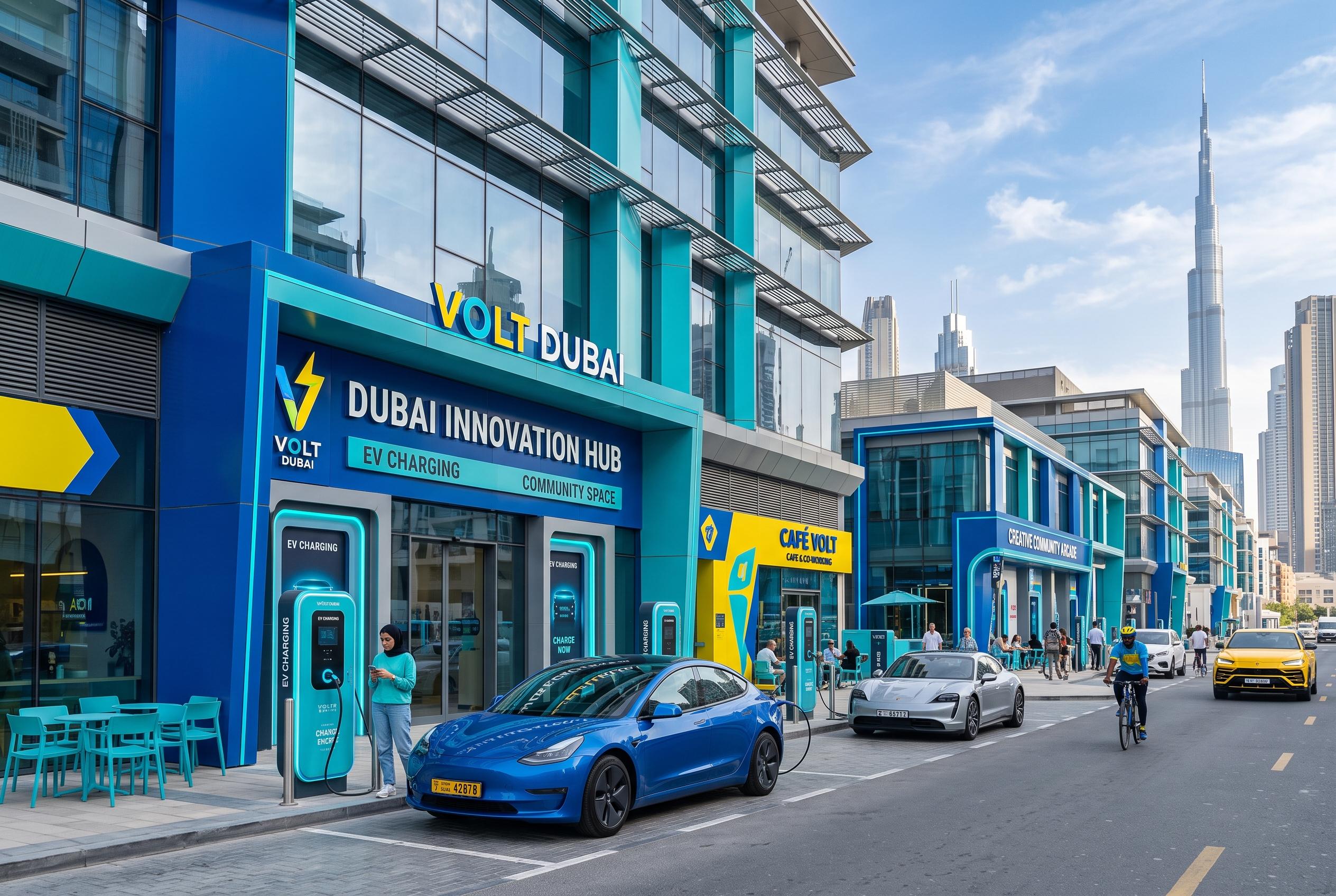
Dubai is integrating electric vehicle chargers into community venues such as majlis spaces, wedding halls, and mosques, signalling a strategic move to normalise EV use and support its 2050 net-zero target.
Dubai is expanding its network of electric vehicle (EV) charging stations by bringing infrastructure into places where residents already spend their time , from community centres to wedding halls.
The Community Development Authority (CDA) has entered into a strategic agreement with UAEV, which is the country’s first fully government-owned EV charging network. This move aims to install charging points at a new range of public-facing locations across the emirate. The idea behind this is to make EV use more feasible for day-to-day travel, while also tying transport policy more closely to Dubai’s broader sustainability goals.
As reported by Gulf News, the partnership includes sites managed by the CDA , like majlis spaces, council venues, and wedding halls. These aren’t the typical transport hubs, which makes the initiative pretty interesting. It shifts the focus away from car parks and highways, and instead brings chargers into neighbourhood institutions that already serve as community gathering spots. For EV owners, this could lessen range anxiety and make topping up more convenient, fitting smoothly into their social and civic routines.

The CDA mentioned that this deal formalises a shared commitment to sustainable mobility. UAEV, meanwhile, is being positioned as the government-backed national charge point operator, reinforcing the emirate’s preference for state-led organisation of crucial infrastructure. This is quite significant in a market where the availability of chargers can influence how quickly people are willing to ditch petrol cars.
The first phase of rollout has already gotten underway. Haberler reported that charging stations have been activated at majlis venues in Al Rashidiya, Al Barsha, and Nad Al Sheba. More sites are scheduled for 2026, including additional majlis locations in Al Khawaneej and Al Warqa, along with Al Barsha wedding hall. A second phase is planned for 2027, which aims to extend coverage to Al Twar wedding hall, as well as majlis venues in Al Awir and Hatta.
Sheikha Al Jarman, who is the chief executive of social development at the CDA, mentioned that this project supports Dubai’s shift towards a green economy. Ali Al Darwish, UAEV’s acting CEO, added that the alliance would help make charging more accessible. Their comments highlight a dual focus , not just environmental policy but also making EVs more convenient and encouraging more residents to adopt them.
This announcement fits into a bigger pattern in Dubai, where public bodies are moving swiftly to integrate EV infrastructure into everyday spaces. For example, in April, Dubai Municipality said it planned to install ultra-fast EV chargers at 600 public parking spots in parks, beaches, and leisure centres, with an investment of AED 150 million. Gulf Today reported that the first phase would include 75 super-fast chargers across 150 parking spaces within two years.
What’s interesting is that this municipal effort is rooted in similar logic as the CDA-UAEV partnership. Instead of waiting around for private companies to fill in the gaps, Dubai is using public assets to normalise charging access. Essentially, they’re bringing chargers into neighbourhoods where people spend their time, instead of just on long-distance routes or at traditional petrol stations. It also underscores a belief that visibility , like placing chargers in places where people already go , really matters. When chargers are located at busy venues, they’re easier for people to notice, trust, and incorporate into their daily routines.
Other government bodies are jumping on this bandwagon too. The Islamic Affairs and Charitable Activities Department, for instance, has signed a framework agreement with UAEV to develop EV charging infrastructure in mosque car parks around Dubai. According to their website, this shows how the government considers charging stations part of civic infrastructure , not just transport add-ons. Mosques, majlis halls, public parks, and beaches are all turning into points in the same network.
On the whole, these initiatives suggest a coordinated approach. Dubai seems to be creating an EV ecosystem centred around places people already visit regularly, instead of relying solely on standalone fuel station-style sites. For residents, this makes the switch to electric cars less disruptive. For policy makers, it provides an effective way to support the UAE’s 2050 net-zero target while also demonstrating real progress within the city’s physical environment.
The focus on public spaces is also politically significant. The UAE has committed to reaching net-zero by 2050, with transport playing a crucial role in meeting that goal. EV charging networks are no longer seen as niche or supplementary , they’re becoming part of the core infrastructure that shows how serious a city is about decarbonising transport.
Dubai’s latest moves suggest that the city isn’t just about increasing charger numbers , it’s also rethinking where those chargers belong. By placing them in community venues, officials are essentially turning familiar civic spaces into hubs of the energy transition, making the shift to electric mobility a part of daily life.
- https://www.haberler.com/guncel/dubai-de-devlet-elektrikli-arac-sarj-agi-toplum-tesislerine-kuruluyor-20038721-haberi/ – Please view link – unable to able to access data
- https://gulfnews.com/uae/government/dubai-expands-ev-charging-network-at-majlis-and-wedding-halls-1.500602759 – The Community Development Authority (CDA) in Dubai has entered into a strategic agreement with UAEV – Emarat EV Charging Stations Company, the UAE’s first fully government-owned electric vehicle charging network. This partnership aims to enhance EV charging infrastructure across Dubai by deploying stations at various CDA locations, including Majlis, Councils, and Wedding Halls, making sustainable transport more accessible for residents and visitors. The agreement formalises a shared commitment to advancing sustainable mobility and underscores UAEV’s role as the government-backed national Charge Point Operator (CPO). ([gulfnews.com](https://gulfnews.com/uae/government/dubai-expands-ev-charging-network-at-majlis-and-wedding-halls-1.500602759?utm_source=openai))
- https://www.albawaba.com/business/pr/community-development-authority-and-uaev-1632626 – The Community Development Authority (CDA) in Dubai has signed a strategic agreement with UAEV – Emarat EV Charging Stations Company, the UAE’s first fully government-owned electric vehicle charging network. This partnership aims to enhance electric vehicle (EV) charging infrastructure across Dubai by deploying EV charging stations at numerous CDA locations, including Majlis, Councils, and Wedding Halls, making sustainable transport more readily available for residents and visitors. The agreement formalises a shared commitment to advancing sustainable mobility and highlights UAEV’s significant role as the government-backed national Charge Point Operator (CPO). ([albawaba.com](https://www.albawaba.com/business/pr/community-development-authority-and-uaev-1632626?utm_source=openai))
- https://www.bignewsnetwork.com/news/279177629/cda-uaev-partner-to-enhance-ev-charging-sations-in-dubai – The Community Development Authority (CDA) in Dubai has entered into a strategic agreement with UAEV – Emarat EV Charging Stations Company, the UAE’s first fully government-owned electric vehicle charging network. Under the partnership, EV charging stations will be installed at multiple CDA locations, including Majlis, Councils, and Wedding Halls. The initiative aims to make sustainable transport more accessible for residents and visitors. The agreement formalises a shared commitment to advancing sustainable mobility and highlights UAEV’s role as the government-backed national Charge Point Operator (CPO). ([bignewsnetwork.com](https://www.bignewsnetwork.com/news/279177629/cda-uaev-partner-to-enhance-ev-charging-sations-in-dubai?utm_source=openai))
- https://www.dubaiprnetwork.com/pr.asp?pr=191297 – Dubai Municipality has launched a new initiative to install electric vehicle (EV) supercharging stations across 600 parking spaces in public parks, beaches, and recreational facilities, with a planned investment of AED 150 million. The project is being implemented in partnership with Emarat EV Charging Stations Company (UAEV). This initiative reflects Dubai Municipality’s ongoing commitment to developing future-ready public spaces that support sustainability and encourage the adoption of healthier, more sustainable lifestyles—ultimately enhancing quality of life for residents and visitors across the emirate. ([dubaiprnetwork.com](https://www.dubaiprnetwork.com/pr.asp?pr=191297&utm_source=openai))
Noah Fact Check Pro
The draft above was created using the information available at the time the story first
emerged. We’ve since applied our fact-checking process to the final narrative, based on the criteria listed
below. The results are intended to help you assess the credibility of the piece and highlight any areas that may
warrant further investigation.
Freshness check
Score:
8
Notes:
The article reports on a recent partnership between the Community Development Authority (CDA) and UAEV to install electric vehicle (EV) charging stations in community venues across Dubai. The earliest known publication date of similar content is July 9, 2026, as reported by Gulf News. ([gulfnews.com](https://gulfnews.com/uae/government/dubai-expands-ev-charging-network-at-majlis-and-wedding-halls-1.500602759?utm_source=openai)) The article appears to be original and not recycled from other sources. However, the presence of similar reports in reputable outlets suggests that the information is not entirely new. ([albawaba.com](https://www.albawaba.com/business/pr/community-development-authority-and-uaev-1632626?utm_source=openai))
Quotes check
Score:
7
Notes:
The article includes direct quotes from Sheikha Al Jarman, CEO of the Social Development Sector at CDA, and Ali Al Darwish, Acting CEO of UAEV. These quotes are consistent with those found in other reports from July 9, 2026. ([gulfnews.com](https://gulfnews.com/uae/government/dubai-expands-ev-charging-network-at-majlis-and-wedding-halls-1.500602759?utm_source=openai)) While the quotes are consistent, their exact origins are not independently verifiable, as they are not attributed to specific interviews or press releases.
Source reliability
Score:
6
Notes:
The article originates from Haberler.com, a Turkish news website. While it provides a translation of the original Arabic content, the credibility of Haberler.com is not well-established in the context of UAE news. The article cites Gulf News and Al Bawaba, both reputable sources, which adds some credibility. However, the reliance on a translated source raises concerns about potential inaccuracies or misinterpretations.
Plausibility check
Score:
9
Notes:
The initiative to install EV charging stations in community venues aligns with Dubai’s ongoing efforts to promote sustainable mobility. Similar projects have been reported, such as the partnership between CDA and UAEV to enhance EV charging stations in Dubai. ([albawaba.com](https://www.albawaba.com/business/pr/community-development-authority-and-uaev-1632626?utm_source=openai)) The claims made in the article are plausible and consistent with Dubai’s sustainability goals.
Overall assessment
Verdict (FAIL, OPEN, PASS): PASS
Confidence (LOW, MEDIUM, HIGH): MEDIUM
Summary:
The article reports on a partnership between the Community Development Authority (CDA) and UAEV to install electric vehicle (EV) charging stations in community venues across Dubai. While the initiative aligns with Dubai’s sustainability goals and similar projects have been reported, the article originates from Haberler.com, a Turkish news website, and relies on translated content. This raises concerns about the accuracy and reliability of the information. Additionally, the quotes included in the article are consistent with those found in other reports but cannot be independently verified. Given these factors, the overall confidence in the article’s accuracy is medium.

