

 2:38 pm - September 29, 2026
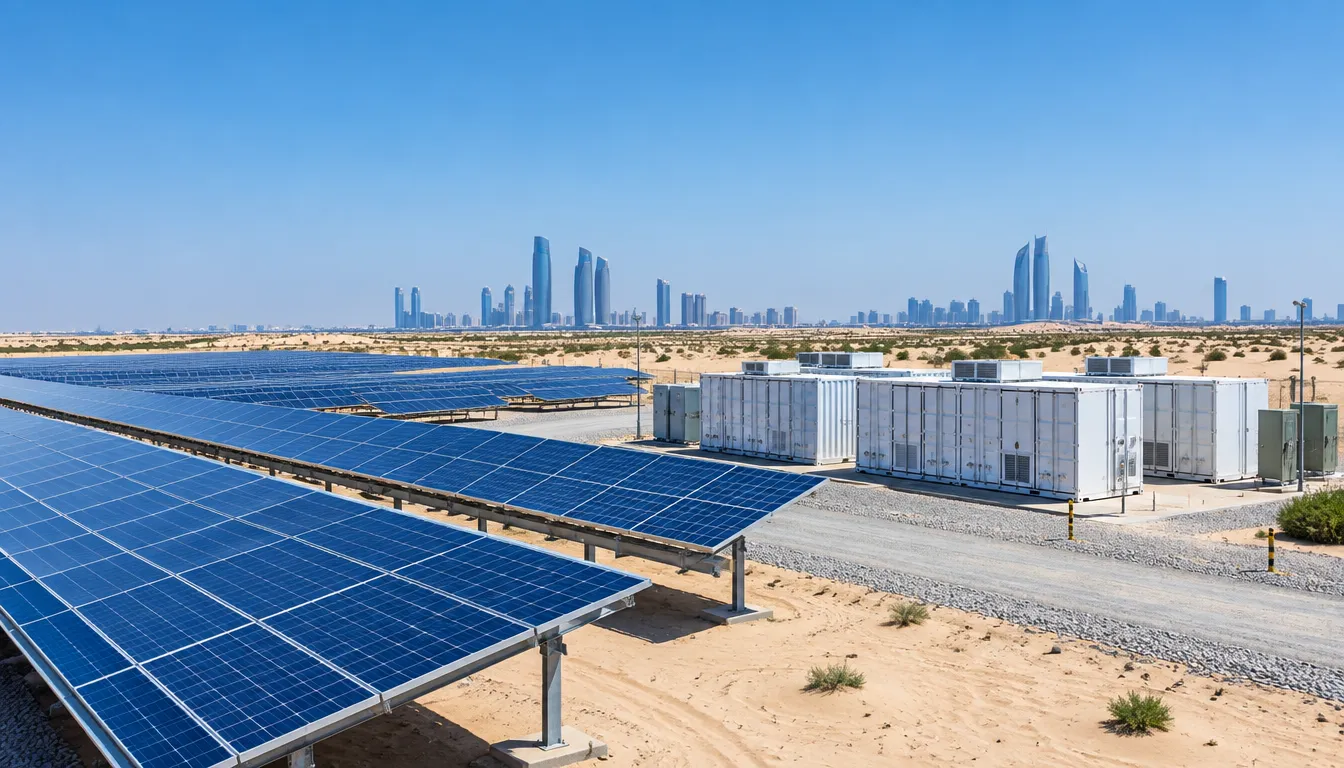
Emirates Water and Electricity Company projects Abu Dhabi carbon emissions falling by more than 45% by 2035, as solar capacity expands to over 35 gigawatts and battery storage reaches up to 15 gigawatts.
Emirates Water and Electricity Company (EWEC) announced on 21 September a forecast cut in Abu Dhabi carbon emissions of more than 45% by 2035. Total emissions from power and water production are set to fall from about 42 million tonnes in 2019 to about 23 million tonnes in 2035, EWEC said. The reduction comes even as electricity demand in Abu Dhabi is forecast to rise by around 70% between 2026 and 2033.
EWEC is the sole procurer and supplier of water and electricity in Abu Dhabi. It runs the long-term planning, purchasing and system dispatch that balance bulk supply and demand for distribution companies and authorities across the emirate and elsewhere in the UAE. The company said the emissions forecast builds on progress already made in decarbonising the system, as gas-fired capacity is steadily displaced by solar power, battery storage and low-carbon desalination. EWEC said the shift also lowers costs and strengthens supply security as the system becomes cleaner, larger and more integrated.
Solar and battery storage build-out
The forecast rests on a rapid expansion of solar power and battery storage across Abu Dhabi. EWEC is scaling solar capacity to 14 gigawatts (GW) by 2030 and beyond 35GW by 2035, backed by up to 15GW of battery storage. As that capacity comes online, EWEC expects gas-fired generation to decline as a share of the system, even though it continues to firm intermittent solar output.
Water production is undergoing a similar shift. EWEC’s reverse osmosis (RO) desalination portfolio is forecast to supply more than 95% of total water production by 2035, reducing the energy intensity of desalination and cutting associated emissions.
Mohamed Almarzooqi, Chief Assets Officer of EWEC, said: “EWEC’s strategic planning ensures that our water and energy infrastructure expands substantially to power economic growth, even as total carbon emissions significantly decline. We are actively procuring the utility-scale solar photovoltaic, battery storage and reverse osmosis desalination capacity required to deliver this outcome, structurally reducing the reliance of the system on gas-fired generation.”

Wider UAE targets
The projection supports the Abu Dhabi Department of Energy’s Clean Energy Strategic Target 2035, which sets a goal of 60% clean energy in the emirate’s electricity mix by that year. EWEC is mandated to help deliver that target, alongside the UAE Water Security Strategy 2036, the UAE Energy Strategy 2050 and the UAE Net Zero by 2050 strategy, largely by diversifying the energy mix with renewable power, battery storage and low-carbon desalination capacity. EWEC published the outlook on Zero Emissions Day, marked annually on 21 September to promote a single day without emissions from energy use.
The forecast comes as demand keeps rising. EWEC expects electricity use in Abu Dhabi to grow by around 70% between 2026 and 2033, driven by the pace of the emirate’s economic and population growth. Meeting that growth while continuing to cut Abu Dhabi carbon emissions will require sustained investment in solar power, storage and desalination capacity through the next decade.
For investors and developers, the scale of the build-out points to sustained UAE demand for utility-scale solar, grid-scale battery storage and reverse osmosis equipment. The plan runs alongside Dubai’s own battery storage push, part of a wider UAE shift toward pairing solar power with storage to keep clean electricity available around the clock. It also reinforces Abu Dhabi’s position as one of the Gulf’s largest sources of utility-scale battery storage demand.

