

 10:44 am - October 15, 2026
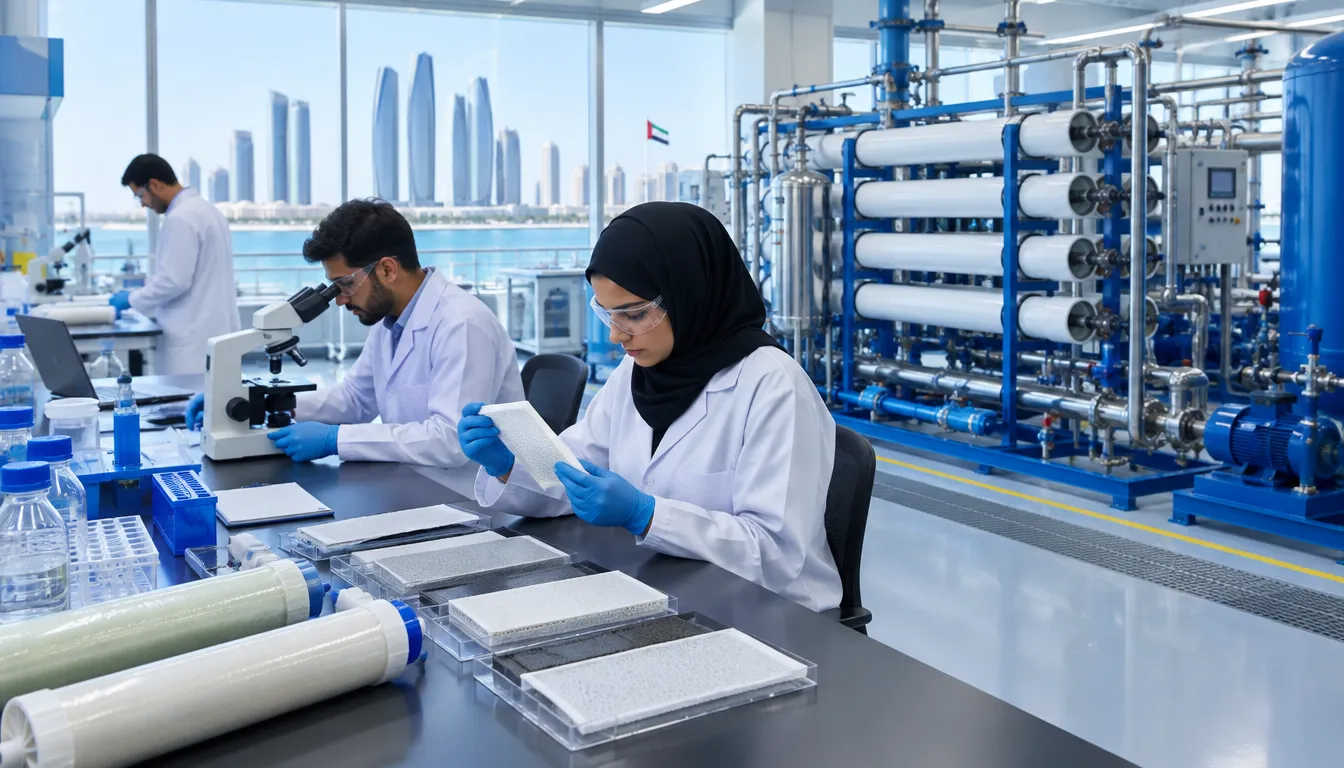
Khalifa University has launched a UNESCO Chair on Global Water Resilience, uniting research, policy and industry to strengthen UAE water security ahead of the UN Water Conference in Abu Dhabi this December.
Khalifa University has established the UNESCO Chair on Global Water Resilience, Innovation and Sustainable Solutions, a UAE-anchored platform intended to connect scientific research with policy and industry on water treatment, desalination, wastewater reuse and governance. The university announced the Chair on 30 June, framing it as a direct contribution to UAE water security ahead of the 2026 UN Water Conference, which the UAE co-hosts with Senegal in Abu Dhabi from 8 to 10 December.
The Chair is hosted by the university’s Center for Membranes and Advanced Water Technology (CMAT) and is the UAE’s fourth UNESCO Chair. Its research agenda spans six areas: water security and climate resilience, water treatment and circular reuse, membrane science, water quality monitoring and sensing, nature-based solutions, and water policy and governance. A global network of partner institutions across Europe, Asia, North America and Australia will support joint research, researcher mobility and student exchange.
Building capacity behind the December conference
Professor Shadi W. Hasan, director of CMAT and chairholder of the new post, said the Chair would connect leading researchers with policymakers and industry “to accelerate the development and adoption of sustainable water technologies.” He added that the goal was to move solutions “beyond the laboratory” and “deliver measurable advances in water resilience.”
For the UAE, the Chair is designed to build institutional capability aligned with the UAE Water Security Strategy 2036 and the UAE Net Zero by 2050 Strategic Initiative. H.E. Professor Ebrahim Al Hajri, president of Khalifa University, said water security “will be defined by how effectively and rapidly the world can turn knowledge into action,” and that the Chair gives the university and its partners “a powerful platform to accelerate that transition at scale.”
H.E. Sheikh Salem Al Qassimi, Minister of Culture and chair of the UAE National Commission for Education, Culture and Science, called the appointment the UAE’s fourth UNESCO Chair and said it reinforces the country’s role in “fostering collective action on water resilience for a more sustainable future.” Dr Abou Amani, director of UNESCO’s Division of Water Sciences, said the Chair’s hosting of the UNESCO IHP Youth4Water Flagship Initiative gives young scientists a platform to help “shape the future of water.”

The Chair aims to deliver 10 international research projects and more than 20 high-impact publications over its term, while running the Global Water Hackathon 2026 alongside UNESCO. Winners of that competition will be announced during the December conference, with AED290,000 in prizes for water solutions developed by young researchers from around the world.
The initiative adds to a run of UAE moves this year to link water diplomacy, research and international science ahead of December, including a UNESCO hydrology meeting the UAE hosted to build cooperation among young water scientists. With Abu Dhabi positioning itself as a hub for water research and policy dialogue, the new Chair gives technology developers and investors a clearer route into the UAE water security agenda, and a formal channel for turning desalination, reuse and monitoring research into deployable projects.

