

 3:43 pm - October 15, 2026
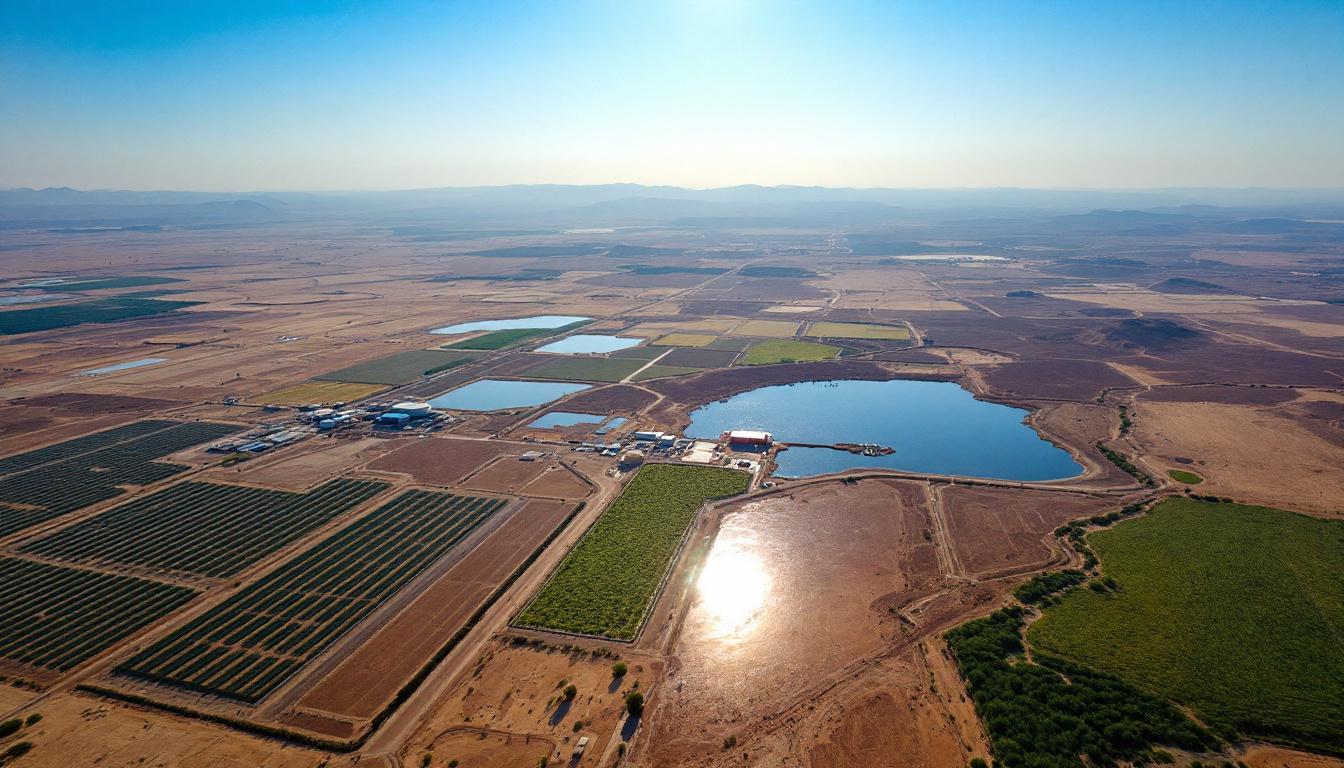
Six finalist teams from around the world have advanced to the final phase of the Mohamed bin Zayed Water Initiative’s agriculture challenge, aiming to develop practical solutions for water-efficient farming in arid conditions, with testing set to take place in the UAE.
The Mohamed bin Zayed Water Initiative has advanced six teams to the final phase of its agriculture challenge, bringing together innovators from the UAE, Egypt, Brazil, Argentina, and India. This competition is aimed at reducing water usage in farming practices without sacrificing crop yields.
As reported by The National, these finalists were selected from a pool of 846 entries from 54 countries. They were narrowed down from 21 teams that had moved forward in earlier rounds. The challenge, part of the larger Water Challenge program, seeks to turn promising ideas into practical tools that can thrive in the extreme conditions of the UAE, and possibly in other regions facing water shortages.
The six finalists showcase a wide array of different approaches. For example, Dubai-based Creta has designed a system that leverages the stable temperatures of underground layers to cool incoming air via buried pipes, thus reducing the need for water-intensive cooling methods. Similarly, Raincatcher, also based in the UAE, is working on improving irrigation efficiency by maintaining moisture in the root zone for longer periods.

From Egypt, Agri-Vit created a biofertilizer aimed at helping crops cope better with heat and salinity, while also requiring less water. In Brazil, Kreltc has used nanotechnology to develop a natural biostimulant that enhances crop resilience and water efficiency, which is pretty handy. Meanwhile, in Argentina, M4Life has engineered specific microbes that help soil save and gradually release water, supporting plants through drought and salinity stress. India’s EF Polymer has taken a different route altogether, transforming fruit waste into a soil additive that promotes plant growth in desert-like conditions and decreases irrigation needs.
What sets this initiative apart isn’t just its scale, but also its focus on real-world testing. The finalists will now undergo trial runs in the UAE, where their technologies will be evaluated in both indoor and outdoor agricultural settings over the coming months. These tests are planned to take place at Silal’s Innovation Oasis in Al Ain, a dedicated R&D facility that includes greenhouses, net houses, open fields, and advanced labs. The environment there aims to mimic real farm conditions, providing a realistic testing ground.
This step, field validation, is pretty important. You see, in water-scarce regions, many promising agri-tech ideas look good on paper or in the lab, but fail when faced with actual conditions like heat, salinity, dust, or the complexities of real farming operations. By testing in UAE conditions, organizers hope to separate effective, scalable solutions from mere concepts.
The total prize money for the challenge is Dh8 million (around $2 million). But honestly, the bigger value might be the pathway it creates, helping turn ideas into deployable solutions. The organizers and partners say they aim to find workable solutions first for the UAE, then to expand these to other countries facing similar water challenges.
This challenge has been launched by the Mohamed bin Zayed Water Initiative, in partnership with the Abu Dhabi Agriculture and Food Safety Authority, Aspire, an advanced technology accelerator linked with the Advanced Technology Research Council, and Silal. Zayed Higher Organisation is also involved as a partner.
Aisha Al Atiqi, CEO of the Mohamed bin Zayed Water Initiative, said she’s pleased to see such a diverse group of innovators reaching this final phase. She underlined that agriculture remains one of the biggest consumers of fresh water worldwide, that’s why it’s such a critical target for urgent innovations. She added that the teams’ models and technologies show real promise for saving water while maintaining or even enhancing farm productivity.
Dr. Mohammed Ateq Al Falahi, DG of Zayed Higher Organisation, emphasized that their foundation is dedicated to building resilient agricultural systems and better water management. He noted that moving promising ideas into real-world testing fits perfectly with that mission, helping to evaluate what can truly work at scale.
Dhafir Qasimi, CEO of Silal, pointed out that these projects exemplify practical innovation capable of supporting farmers and bolstering food security, especially in places where water is limited, which is, well, pretty much the story across the UAE. He highlighted that the focus is on real solutions that can genuinely make a difference.
Stefan Timpano, CEO of Aspire, mentioned that this final stage is where innovation truly meets practical application. He explained that Aspire is guiding these projects from concept through testing and toward implementation, with the goal of ensuring these solutions are validated within the UAE’s specific environment. He linked this mission to Abu Dhabi’s larger vision of becoming a hub for applied research, advanced tech, and innovation.
Mouza Suhail Al Muhairi, deputy director-general at the Abu Dhabi Agriculture and Food Security Authority, said reaching this stage is a significant milestone, it indicates the solutions have real potential. She confirmed their ongoing support for testing and evaluating innovations that promote sustainable farming and responsible water use, aligning with the UAE’s strategic goals for food security and sustainability.
With climate pressures reshaping agricultural policies across the Gulf and beyond, this challenge arrives at a crucial time. Rising temperatures and increasing water scarcity are driving demand for better irrigation, soil improvement, and crop resilience technologies. For the UAE, this initiative also plays a strategic role, putting the country at the forefront of climate tech testing that could have worldwide implications.
The winners and the top teams are scheduled to be announced at the end of 2026. Until then, the focus remains on whether these six solutions can be more than just ideas, they need to prove their ability to fundamentally change how we grow food in a drier, more challenging world.
- https://www.emaratalyoum.com/local-section/other/2026-05-01-1.2041428 – Please view link – unable to able to access data
- https://www.thenationalnews.com/news/uae/2026/04/30/mohamed-bin-zayed-water-initiative-announces-finalists-for-agriculture-challenge/ – The Mohamed bin Zayed Water Initiative has announced the six teams advancing to the final stage of the Al Miyah Challenge for Agriculture. These teams, selected from 846 participants across 54 countries, will now undergo real-world testing of their water-efficient agricultural solutions in the UAE. The challenge aims to identify innovative methods to enhance water use in both indoor and outdoor farming environments. The final winner and top-performing teams will be announced by the end of 2026.
- https://www.alkhaleej.ae/2026-04-30/الإمارات/أخبار-الدار/مبادرة-محمد-بن-زايد-للماء-تعلن-تأهل-ستة-فرق-إلى-نهائيات-تحدي-المياه-من-أجل-الزراعة – The Mohamed bin Zayed Water Initiative has selected six teams to advance to the final stage of the ‘Water for Agriculture Challenge’. This follows the announcement of the qualified teams in 2025. The six teams were chosen from 21 that advanced to the previous stage, out of 846 teams from 54 countries worldwide. The selected teams have developed promising innovations aimed at enhancing water efficiency in both indoor and outdoor agricultural environments.
- https://www.mediaoffice.abudhabi/ar/environment/mohamed-bin-zayed-water-initiatives-al-miyah-challenge-for-agriculture-announces-6-global-finalists-advancing-to-real-world-testing-in-uae/ – The Mohamed bin Zayed Water Initiative has announced six international teams advancing to the final stage of the ‘Water for Agriculture Challenge’. These teams will now proceed to real-world testing of their solutions in the UAE. The challenge aims to identify innovative and practical solutions to be implemented in the UAE, with the possibility of expanding their application to other countries facing water scarcity challenges. The total prize value for the challenge is eight million dirhams (approximately two million dollars).
- https://www.pakistanpoint.com/ar/news/uae/story-2042415.html – The Mohamed bin Zayed Water Initiative has announced the names of 21 teams that have advanced to the next stage of the ‘Water for Agriculture Challenge’. This is the first in a series of challenges under the ‘Water Challenge’ program launched by the initiative. The selected teams were chosen from hundreds of applications received from 54 countries, after presenting innovative solutions aimed at reducing water consumption in the agricultural sector while maintaining or improving crop productivity.
- https://www.aletihad.ae/news/الإمارات/4605193/مبادرة-محمد-بن-زايد-للماء–تعلن-أسماء-الفرق-المتأهلة-للمرحلة-التالية-من-تحدي-المياه-من-أجل-الزراعة – The Mohamed bin Zayed Water Initiative has announced the names of 21 teams that have advanced to the next stage of the ‘Water for Agriculture Challenge’. This is the first in a series of challenges under the ‘Water Challenge’ program launched by the initiative. The selected teams were chosen from hundreds of applications received from 54 countries, after presenting innovative solutions aimed at reducing water consumption in the agricultural sector while maintaining or improving crop productivity.
- https://emarat24.org/news/9631870 – The Mohamed bin Zayed Water Initiative has launched the ‘Water Challenge’ program, aiming to accelerate the development and application of innovative solutions to enhance water efficiency. The first challenge, titled ‘Water for Agriculture Challenge’, seeks to drive innovation in technologies that reduce water consumption in agriculture while preserving productivity. Innovators from within the UAE and around the world are invited to showcase their solutions, with plans to test them in the UAE by December 2026, with potential for application in other regions facing similar challenges.
Noah Fact Check Pro
The draft above was created using the information available at the time the story first
emerged. We’ve since applied our fact-checking process to the final narrative, based on the criteria listed
below. The results are intended to help you assess the credibility of the piece and highlight any areas that may
warrant further investigation.
Freshness check
Score:
10
Notes:
The article was published on May 1, 2026, and reports on an announcement made on April 30, 2026. No earlier publications of this specific content were found, indicating high freshness.
Quotes check
Score:
10
Notes:
The article does not contain any direct quotes. The information is presented in a paraphrased manner, which is appropriate for news reporting.
Source reliability
Score:
8
Notes:
The article is from Emarat Al Youm, a UAE-based news outlet. While it is a reputable source within the UAE, it may not have the same international recognition as some other outlets. The information aligns with reports from other sources, such as The National and the UAE Government Media Office, which adds credibility.
Plausibility check
Score:
9
Notes:
The claims about the Mohamed bin Zayed Water Initiative and the Al Miyah Challenge for Agriculture are plausible and consistent with known initiatives in the UAE. The descriptions of the finalist teams’ innovations are detailed and align with current agricultural technology trends. However, the article’s tone is somewhat informal, which may not be typical for official announcements.
Overall assessment
Verdict (FAIL, OPEN, PASS): PASS
Confidence (LOW, MEDIUM, HIGH): MEDIUM
Summary:
The article provides timely and detailed information about the Mohamed bin Zayed Water Initiative’s Al Miyah Challenge for Agriculture, with no significant issues identified. However, the reliance on UAE-based sources and the informal tone of the article suggest a medium level of confidence in its overall reliability. Further cross-referencing with independent international sources is recommended for a more comprehensive verification.

