

 6:10 pm - November 22, 2026

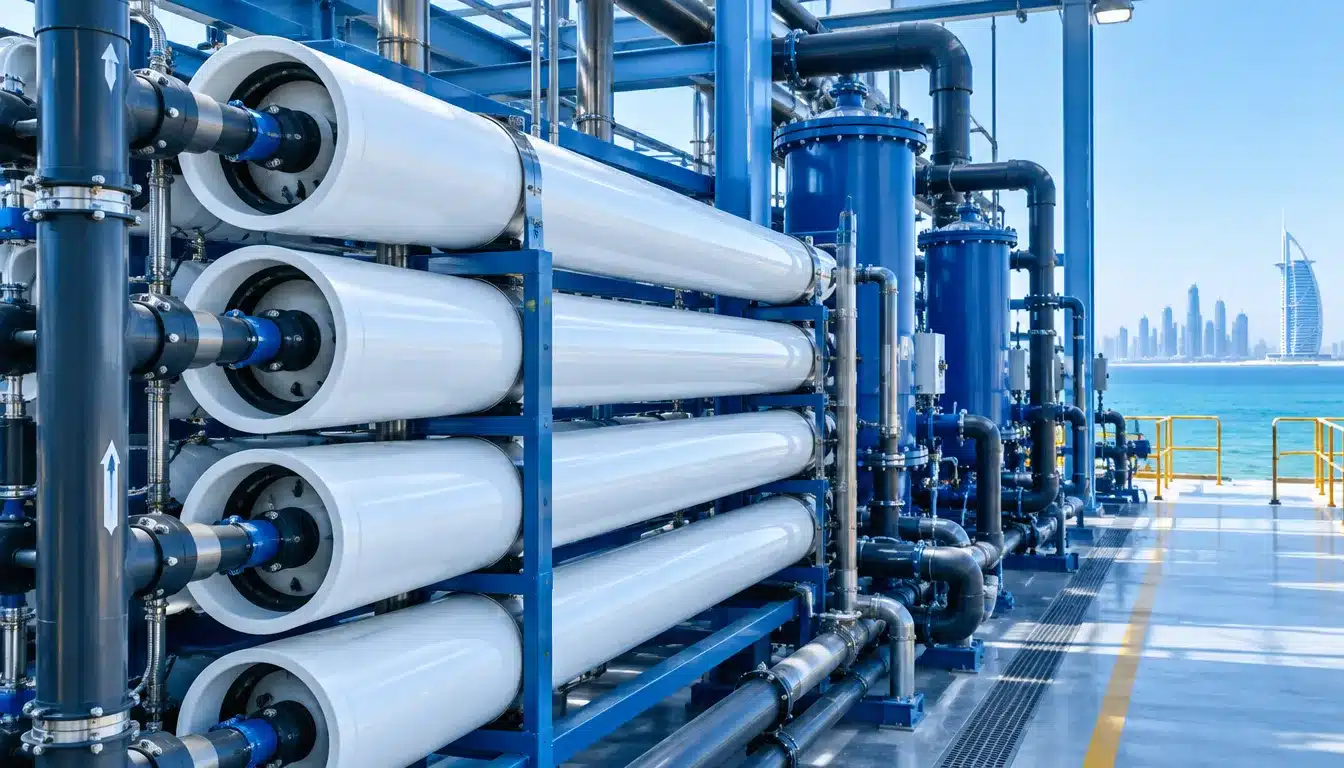
Abu Dhabi’s Technology Innovation Institute is developing ceramic desalination membranes projected to last about 20 years, against three to four for polymer, with a real-world pilot targeted by the end of 2026.
The Technology Innovation Institute (TII) in Abu Dhabi is working on desalination membranes made from ceramic rather than polymer, with a projected working life of about 20 years. Conventional reverse-osmosis membranes last three to four years, according to details of the project from TII’s Renewable and Sustainable Energy Research Centre. The 20-year figure is a projection that still needs extended testing under operating conditions.
Professor Phil Hart, Chief Researcher and Head of the centre, framed the research around the material. “If plastic is the problem, what can we build it with?” he said. Desalination plants use tens of thousands of membranes, so longer-lasting desalination membranes would cut the frequency of replacement and the maintenance that goes with it.
How the ceramic design works
Reverse osmosis pushes seawater under pressure across a membrane that lets water through and leaves salt behind. Polymer membranes have pressure limits, and the harsh chemicals used to clean them can degrade the material over time. The ceramic desalination membranes are designed to be stronger, more resistant to abrasion and less prone to clogging. They should also tolerate harsher cleaning chemicals and potentially higher operating pressures.
The ceramic does not separate salt by itself. A specialised coating inside the membrane performs that task. Hart said each membrane will cost more than a polymer unit but that the technology should pay for itself quickly. “Each membrane will cost more, but you’ll get more water, less maintenance,” he said.
Recovery gains and timeline
Conventional systems recover about 40% to 45% of the water they treat. The TII team expects the new membranes could add 10 to 20 percentage points to that figure. The gain has not been shown at scale, so the figure remains an expectation rather than a measured result.

TII plans to test the ceramic desalination membranes in a real-world rig by the end of 2026. The team expects to scale up and run several months of testing in 2027. The team says the membranes need at least six months of testing in connected units before industry adopts them. TII then plans to hand the technology to a TII group company for manufacturing and commercialisation in 2027.
Other UAE groups are also developing water filtration membranes, including a PFAS project at NYU Abu Dhabi.
The institute is also developing a separate cooling technology, the cold box. It works alongside conventional air conditioning and takes on part of its cooling load. It relies on heat exchangers and specific gases circulating in a loop, with heat driving part of the cycle. The team is examining whether UAE solar energy could supply that heat. Only a laboratory version exists, and TII has not published a verified energy-saving figure. A pilot-scale unit is planned for the start of 2027, with a much larger unit later that year.
For both technologies, Hart set a plain commercial test. “If it’s not at least as good and at least the same price, then we’ve failed,” he said.
The UAE depends heavily on desalination for its water supply. Membrane replacement is a recurring cost for plant operators, and higher recovery would mean less seawater drawn per litre produced. Universities across the country are also expanding research on UAE water security. Investors and utilities will watch whether the pilot rig confirms the projected lifespan and recovery gains before the 2027 commercial handover.

